These book materials are in English.
Prostate Unlocked: Online Appendices
The nine full appendices accompany Prostate Unlocked. They remain in the ebook working source and are provided online for print readers. The October 2026 manuscript revision is under review; this page does not announce a new published edition.
Educational information supports a conversation with your clinician. Individual risks, tests and treatment need personal medical advice. Do not delay urgent care or change medicines based only on an appendix.
Contents
- Appendix A: Prostate Terms Glossary
- Appendix B: The Prostate Size Gauge
- Appendix C: Prostate Cancer Risk Groups
- Appendix D: BPH Medication Guide
- Appendix E: BPH Procedure Comparison
- Appendix F: Questions to Ask Your Urologist
- Appendix G: Testosterone Safety Checklist
- Appendix H: Supplements Evidence Filter
- Appendix I: Visit Preparation Sheet

Appendix A: Prostate Terms Glossary
Use this glossary when a term appears in a test report or treatment discussion. Ask your clinician to explain what it means in your particular case.
Prostate
The prostate is a male gland that sits under the bladder and surrounds the urine channel. It produces fluid that becomes part of semen and makes PSA, a protein used in both reproduction and prostate cancer-risk testing. Why it matters: Because the prostate surrounds the urine channel, enlargement can interfere with urination and stress the bladder.
Bladder
The bladder is the muscular organ that stores urine and then squeezes to empty. Why it matters: In prostate enlargement, the prostate may create the blockage, but the bladder is the organ that has to fight against it.
Urethra
The urethra is the tube that carries urine from the bladder out through the penis. Why it matters: The prostate surrounds part of the urethra. If the prostate enlarges, the urethra can become compressed or distorted.
Bladder Neck
The bladder neck is the opening where urine leaves the bladder and enters the urine channel. Why it matters: A tight or blocked bladder neck can cause slow urination, straining, incomplete emptying, or retention.
Median Lobe
The median lobe is the middle portion of the prostate that can grow upward toward the bladder opening. Why it matters: When this part grows upward, it can block urine like a ball valve.
Prostate Tissue Growing Into the Bladder
Doctors may call this intravesical prostatic protrusion, or IPP. The plain-English meaning is that part of the prostate is bulging into the bladder opening.
Why it matters: This can act like a ball valve. Medication may relax the prostate opening, but it usually cannot make this tissue disappear.
Transition Zone
The transition zone is the part of the prostate near the urine channel where benign enlargement usually develops. Why it matters: Growth in this area can narrow or distort the urinary passage.
Peripheral Zone
The peripheral zone is the outer/back part of the prostate where many prostate cancers begin. Why it matters: Cancer in this area may not cause urinary symptoms early.
BPH
BPH stands for benign prostatic hyperplasia. It means noncancerous enlargement of the prostate. Why it matters: BPH is not cancer, but it can still block urine, damage sleep, cause retention, and harm bladder function.
Benign
Benign means not cancer. Why it matters: Benign does not mean harmless. A benign prostate can still block urine and damage the bladder.
Urinary and BPH Terms Urinary Symptoms
Urinary symptoms include weak stream, urgency, frequency, nighttime urination, incomplete emptying, straining, and stopping and starting. Why it matters: Symptoms tell us what the patient feels, but they do not always show how serious the obstruction or bladder problem is.
Weak Stream
A weak stream means urine comes out with less force than it used to. Why it matters: It may indicate prostate blockage, a weak bladder, a tight bladder opening, or narrowing in the urine channel.
Hesitancy
Hesitancy means it takes time for urine to start. Why it matters: Urination should not feel like a negotiation. Waiting to start may suggest resistance at the outlet or poor bladder coordination.
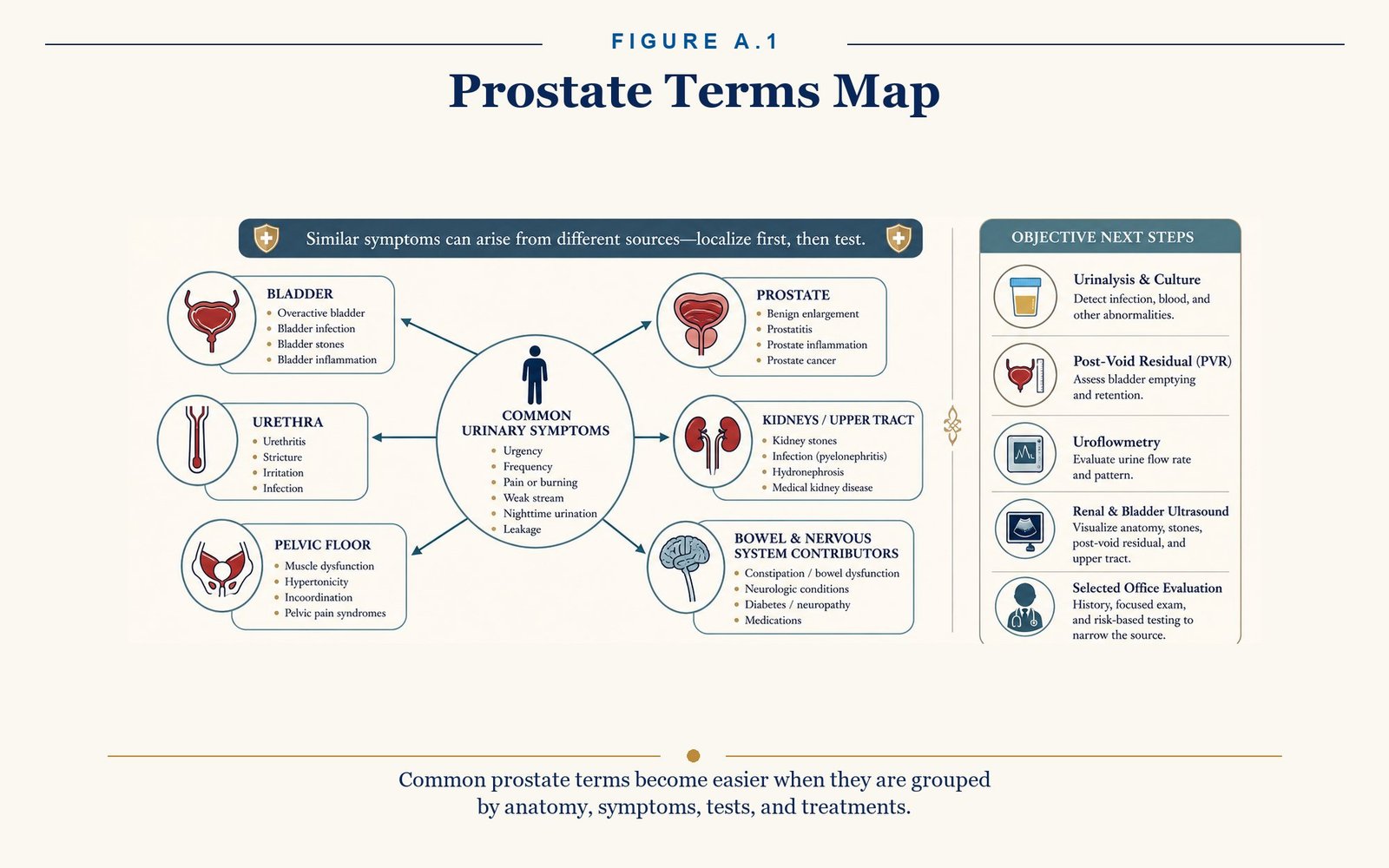
Prostate Terms Map. Grouping terms by anatomy, symptoms, tests, and treatments makes them easier.
Intermittency
Intermittency means the urine stream starts and stops. Why it matters: It may suggest obstruction, bladder weakness, or both.
Straining
Straining means pushing with the abdomen to urinate. Why it matters: The bladder should not need help from abdominal pressure to empty.
Urgency
Urgency means a sudden, strong need to urinate. Why it matters: Urgency can come from overactive bladder, but it can also be the bladder reacting to prostate obstruction.
Frequency
Frequency means urinating often during the day. Why it matters: It may occur because the bladder is irritated, because urine is left behind, or because of diabetes, fluids, caffeine, medications, or other causes.
Nocturia
Nocturia means waking up at night to urinate. Why it matters: Nighttime urination damages sleep. It may be caused by prostate obstruction, bladder irritation, sleep apnea, diabetes, fluids, alcohol, medications, heart issues, kidney issues, or other causes.
Incomplete Emptying
Incomplete emptying means the bladder does not fully empty after urination. Why it matters: A man may feel empty but still leave urine behind.
Urine Left Behind After Urination
Doctors call this post-void residual, or PVR. The patient-friendly meaning is simple: urine remains in the bladder after the man thinks he is finished. Why it matters: Too much leftover urine may increase the risk of infection, stones, frequency, retention, and bladder damage.
Urinary Retention
Retention means the bladder cannot empty properly or cannot empty at all. Why it matters: Acute retention can require emergency catheter placement. Chronic retention may happen silently when large amounts of urine remain after urination.
Catheter
A catheter is a tube placed into the bladder to drain urine. Why it matters: It may be needed when a man cannot urinate or when the bladder is not emptying safely.
Testing Terms Urinalysis
A urinalysis is a basic urine test. Why it matters: It can show blood, infection, glucose, protein, and other clues.
PSA
Why it matters: PSA is used as a prostate cancer-risk signal, but it is not a cancer diagnosis. PSA can also rise from benign enlargement, inflammation, infection, retention, and procedures.
Prostate Ultrasound
Prostate ultrasound uses imaging to measure the prostate and evaluate its shape. Why it matters: It can show prostate size and whether tissue is growing into the bladder opening.
Bladder Scan
A bladder scan uses ultrasound to estimate urine left after urination. One reading alone does not establish that the bladder is safe; timing, repeat measurements, symptoms, and other findings matter.
Urine-Flow Test
A urine-flow test measures how fast urine comes out. Why it matters: A very slow stream may suggest prostate blockage, weak bladder muscle, or both.
Maximum Speed of Urination
Doctors may call this Qmax. It means the fastest speed of the urine stream during a flow test. Why it matters: A slow top speed can be a warning sign that urine is not passing freely.
Cystoscopy
Cystoscopy is a small camera test that looks inside the urine channel, prostate channel, bladder opening, and bladder. Why it matters: It can show blockage, scar tissue, stones, tumors, inflammation, or signs of long-term obstruction.
Bladder Pressure Testing
Doctors call this urodynamics. It measures how the bladder stores urine and how strongly it can push urine out. Why it matters: It helps determine whether the problem is blockage, weak bladder muscle, or both.
MRI
MRI is detailed imaging of the prostate. Why it matters: It helps evaluate prostate cancer risk, identify suspicious areas, and guide biopsy decisions.
MRI Score
Doctors often use a score from 1 to 5 to describe how suspicious a prostate MRI finding looks. Why it matters: Lower scores are usually less concerning; higher scores are more concerning. A middle score requires judgment.
Biopsy
A biopsy samples small pieces of prostate tissue. Why it matters: Biopsy is how prostate cancer is diagnosed and graded.
PSMA PET Scan
A PSMA PET scan is advanced imaging used mainly to look for prostate cancer spread in higher-risk cases. Why it matters: It can help determine whether cancer is confined to the prostate or has spread elsewhere.
PSA and Cancer Terms Cancer-Risk Signal
A cancer-risk signal raises suspicion without proving cancer. PSA, MRI, and biopsy provide different information; a negative test does not always exclude cancer.
Gleason Score
The Gleason score describes how aggressive prostate cancer looks under the microscope. Why it matters: Gleason 3+3 is different from 4+3, even though both use similar numbers.
Grade Group
Grade Group is a newer, simpler way to describe prostate cancer aggressiveness. Why it matters: Grade Group 1 is usually the lowest-risk category. Grade Group 5 is the highest.
Low-Risk Prostate Cancer
Low-risk prostate cancer is cancer that appears unlikely to harm the man quickly. Why it matters: Many low-risk cancers can be monitored with active surveillance instead of treated immediately.
Active Surveillance
Active surveillance means carefully monitoring low-risk prostate cancer instead of treating it immediately. Why it matters: It helps avoid unnecessary surgery or radiation in men whose cancer may never harm them.
Favorable Intermediate-Risk Cancer
This is a middle category where some men may still be candidates for surveillance, depending on details. Why it matters: Not every intermediate-risk cancer behaves the same way.
Unfavorable Intermediate-Risk Cancer
This is a more concerning category that usually pushes more strongly toward treatment. Why it matters: Gleason 4+3 disease is generally more concerning than 3+4.
High-Risk Cancer
High-risk prostate cancer has features suggesting a greater chance of growth, spread, or recurrence. Why it matters: It usually requires staging and more serious treatment planning.
Metastatic Prostate Cancer
Metastatic means cancer has spread beyond the prostate. Why it matters: Treatment becomes systemic, not just local.
BPH Treatment Terms Alpha Blocker
An alpha blocker is a medication that relaxes muscle around the prostate opening and bladder neck. Why it matters: It may improve urination quickly, but it does not shrink the prostate or remove tissue. Possible side effects: Dizziness, lightheadedness, blood pressure effects, ejaculation changes.
Prostate-Shrinking Medication
Finasteride and dutasteride are examples. They can slowly shrink selected enlarged prostates by affecting DHT, a hormone involved in prostate growth. Why it matters: They can help selected men with larger glands, but they take time and change PSA interpretation.
Possible side effects: Decreased libido, erectile changes, ejaculation changes, breast tenderness, mood changes in some men.
Daily Tadalafil
Tadalafil is commonly known by the brand name Cialis. It can help erections and may improve urinary symptoms in selected men. Why it matters: It is useful when erectile dysfunction and mild or moderate urinary symptoms overlap, but it is not an anatomy fix.
Possible side effects: Headache, flushing, heartburn, nasal congestion, back or muscle aches. It should not be used with nitrates.
Rezūm
Rezūm uses water vapor energy to treat selected enlarged prostate tissue. Why it matters: It can help men move beyond medication without traditional surgery, especially when the prostate size and anatomy fit.
PAE
PAE stands for prostate artery embolization. It treats the prostate through its blood supply. Why it matters: It can be especially important for larger prostates and prostates growing into the bladder opening.
UroLift
UroLift uses implants to pull prostate tissue aside. Why it matters: It may help selected men with smaller, favorable anatomy but does not shrink or remove tissue.
Aquablation
Aquablation uses a robotically guided waterjet to remove prostate tissue. Its benefits, bleeding and other complications, sexual outcomes, and recovery depend on patient selection and technique.
TURP
TURP is a traditional procedure that shaves out obstructing prostate tissue through the urine channel. Why it matters: It can be effective but is more anatomy-altering and commonly affects ejaculation.
HoLEP
HoLEP is a laser procedure that shells out obstructing prostate tissue. Why it matters: It can be powerful for large glands in experienced hands but commonly changes ejaculation.
Sexual Function and Hormone Terms Erectile Dysfunction
Erectile dysfunction means difficulty getting or keeping an erection firm enough for sex. Why it matters: ED can be a vascular warning sign and may overlap with prostate, hormone, sleep, metabolic, and medication issues.
Libido
Libido means sexual desire. Why it matters: Low libido may relate to testosterone, sleep, stress, relationship factors, medication, depression, or general health.
Retrograde Ejaculation
Retrograde ejaculation means semen goes backward into the bladder instead of out through the penis. Why it matters: It can occur with some prostate medications and procedures. It is usually not dangerous but may bother men and can affect fertility.
Dry Orgasm
Dry orgasm means orgasm occurs with little or no semen coming out. Why it matters: It may occur after prostate procedures, prostate cancer surgery, or certain medications.
Testosterone
Testosterone is the main male hormone involved in libido, energy, muscle, mood, sexual function, bone health, and other systems. Why it matters: Low testosterone can affect quality of life, but testosterone therapy requires prostate monitoring.
Free Testosterone
Free testosterone is the portion of testosterone more available to tissues. Why it matters: Total testosterone alone may not tell the full story.
SHBG
SHBG stands for sex hormone binding globulin. It is a protein that binds testosterone. Why it matters: High or low SHBG can affect how much testosterone is available.
Estradiol
Estradiol is a form of estrogen present in men. Why it matters: Men need some estradiol, but imbalance may affect libido, mood, breast tenderness, and other symptoms.
DHT
DHT is a stronger androgen made from testosterone. Why it matters: It is involved in prostate growth, hair biology, and sexual biology.
Appendix B: The Prostate Size Gauge
The Basic Gauge
A young adult prostate is often about 20 grams. Imaging usually reports volume in cubic centimeters or milliliters; grams refer to tissue mass. They are approximately comparable for discussion, but are not identical measurements.
Keep the original value, unit, imaging method, and date in your records. A change between different imaging methods may reflect measurement variation as well as true growth.
Around 20: Smaller Gland
A prostate around 20 grams or less is usually considered small or normal-sized. This does not guarantee that the man has no urinary issue. A man with a small prostate can still have urinary symptoms from bladder dysfunction, pelvic floor tension, infection, inflammation, urethral narrowing, tight bladder neck, diabetes, sleep problems, medication effects, or other causes.
If a man has severe urinary symptoms with a small prostate, the doctor should not automatically blame BPH. A small prostate should push the evaluation toward other possible causes.
20 to 40: Lower Volume Range
Within my teaching framework, this is a lower volume range. Symptoms and emptying, rather than the volume alone, determine whether observation or treatment is appropriate.
But mild enlargement does not always mean mild disease. If prostate tissue is growing upward into the bladder opening, even a prostate in this range can cause meaningful blockage. The gland may not be huge, but it may be growing in a strategically bad direction.
This is the “ball-valve” problem. Part of the prostate bulges into the bladder opening and interferes with urine leaving the bladder.
40 to 60: Intermediate Volume Range
This intermediate volume range may be compatible with several treatment approaches. A weak stream, urgency, nighttime urination, and residual urine need their own assessment; they do not become severe simply because a volume threshold was crossed.
A moderate prostate can create a major quality-of-life problem. The patient may be told it is “not that big,” but that may miss the point. The prostate does not have to be enormous to obstruct.
60 to 100: Larger Gland
A larger gland can change medication and procedural planning. Shrinking medicines act slowly, and an alpha blocker does not remove tissue. These facts inform selection without making a procedure inevitable.
Men in this range should have a real discussion about anatomy and bladder safety. The question is not simply whether the patient can tolerate symptoms. The question is whether the prostate is forcing the bladder to work too hard.
Over 100: Very Large Gland
A prostate over 100 grams is very large. This does not automatically mean the man needs immediate surgery, but it does mean the conversation should be strategic. A very large prostate deserves modern evaluation. The doctor should understand how the prostate is shaped, whether it is growing into the bladder opening, whether urine is left behind, how fast urine comes out, and whether the bladder still appears strong.
Very large prostates often require a discussion beyond simple medication. Options may include prostate artery embolization, HoLEP, simple prostatectomy, or other treatments depending on the man’s anatomy, bladder function, medical condition, sexual priorities, and goals.
Appendix C: Prostate Cancer Risk Groups
Cancer risk spans a wide range. Use this reference to understand the language in your pathology report and discussion; the complete risk group combines grade, PSA, stage, and other clinical findings.
Grade Group
Grade Group is a modern way to describe how aggressive prostate cancer looks under the microscope. It is based on the older Gleason score system, but it is easier for patients to understand. Grade Group 1 is the least aggressive. Grade Group 5 is the most aggressive. A patient should always ask: “What is my Grade Group?” That question is often more useful than simply asking whether cancer was found.
Gleason Score
On needle biopsy, the Gleason score generally combines the most prevalent cancer pattern with the highest additional pattern. The reporting rules differ from those used for a whole removed prostate. The pathologist and treating team should explain the score in your report. 3
Gleason 3+4 is not the same as Gleason 4+3, even though both add up to 7. In 3+4, the less aggressive pattern is dominant. In 4+3, the more aggressive pattern is dominant. A man should ask: “Is this 3+4 or 4+3?” That difference can change the treatment discussion.
Grade Group 1
Grade Group 1 usually corresponds to Gleason 3+3, also called Gleason 6. This is generally the lowest-risk prostate cancer category commonly diagnosed on biopsy.
Many men with Grade Group 1 disease may be candidates for active surveillance rather than immediate treatment. Active surveillance means careful monitoring with PSA, MRI when appropriate, repeat biopsy when needed, and clinical follow-up. It is not ignoring cancer. It is watching a low-risk cancer carefully so the man can avoid unnecessary treatment unless the cancer changes.
Grade Group 2
Grade Group 2 usually corresponds to Gleason 3+4. This means the cancer is mostly pattern 3, with some pattern 4. Pattern 4 is more concerning than pattern 3, so Grade Group 2 needs a more nuanced discussion than Grade Group 1.
Some men with low-volume Grade Group 2 disease may still be considered for active surveillance, especially if the amount of pattern 4 is small, PSA is not high, MRI is reassuring, and genomic testing is favorable. Other men may be better served with treatment.
Grade Group 3
Grade Group 3 usually corresponds to Gleason 4+3. This is different from 3+4.
In Grade Group 3, the more concerning pattern is dominant. This often moves the patient into a more serious treatment discussion.
Grade Group 4
Grade Group 4 usually corresponds to Gleason 8. This is a high-grade prostate cancer category.
High-grade cancer has a greater chance of growth, spread, and recurrence. A man with Grade Group 4 disease usually needs staging and a serious treatment discussion. Patient meaning: This is high-risk biology and should not be managed casually. Ask your doctor: “Do I need PSMA PET or other staging before treatment?”
Grade Group 5
Grade Group 5 usually corresponds to Gleason 9 or 10. This is the highest-grade category.
A man with Grade Group 5 disease needs careful staging and a treatment plan designed for aggressive cancer. This may include radiation, hormone therapy, surgery in selected cases, systemic therapy, or a combination depending on stage and overall health. Patient meaning: This is aggressive prostate cancer and requires timely, expert management. Ask your doctor: “Has the cancer spread, and what is the full treatment strategy?”
Low-Risk Prostate Cancer
Low-risk prostate cancer generally means the cancer appears unlikely to grow or spread quickly. Many low-risk cancers are Grade Group 1, with a relatively low PSA and limited disease on biopsy. The key modern point is that low-risk cancer often does not need immediate treatment.
Active surveillance is often preferred because it can help avoid unnecessary side effects from surgery or radiation. Patient meaning: Low-risk does not mean “nothing.” It means the cancer may be safely monitored. Ask your doctor: “What would make us move from surveillance to treatment?”
Favorable Intermediate-Risk Prostate Cancer
Favorable intermediate-risk cancer is a middle category. It may include some Grade Group 2 disease or other features that are not as low-risk as Grade Group 1 but are still not clearly aggressive.
Some men in this group may be considered for active surveillance if the cancer volume is low, PSA density is low, MRI is reassuring, and the amount of pattern 4 is small. Other men may choose or need treatment. Patient meaning: This is a gray-zone category where individual details matter. Ask your doctor: “What makes my intermediate-risk cancer favorable, and what makes it concerning?”
Unfavorable Intermediate-Risk Prostate Cancer
Unfavorable intermediate-risk cancer is more concerning. This may include Grade Group 3 disease, more extensive cancer, higher PSA, or other features that suggest the cancer is more likely to progress. Men in this category are usually pushed more strongly toward treatment rather than surveillance.
Patient meaning: This is generally not the same as low-risk cancer and usually needs active treatment discussion. Ask your doctor: “What are my treatment options, and do I need additional imaging?”
High-Risk Prostate Cancer
High-risk prostate cancer has features that suggest a greater chance of spread or recurrence. This may involve high Grade Group, high PSA, more advanced local findings, or concerning imaging.
High-risk cancer needs staging. In many men, PSMA PET imaging may be considered to look for spread outside the prostate. Patient meaning: Before choosing treatment, doctors need to know whether the cancer is truly confined to the prostate. Ask your doctor: “Has this cancer been fully staged?”
Metastatic Prostate Cancer
Metastatic prostate cancer means the cancer has spread beyond the prostate. It may spread to lymph nodes, bones, or other areas. Once cancer is metastatic, treatment becomes systemic, meaning it must treat the whole body, not just the prostate.
Hormone therapy is often central. Additional medications, radiation, chemotherapy, targeted therapy, radiopharmaceuticals, or clinical trials may be considered depending on the case. Patient meaning: This is no longer only a local prostate problem. Ask your doctor: “What treatments control the disease throughout the body?”
Cancer Volume
Cancer volume refers to how much cancer was found. A man with one tiny biopsy sample showing low-grade cancer is not the same as a man with cancer in many biopsy samples. The number of positive biopsy cores and the amount of cancer in each core matter.
Patient meaning: How much cancer was found helps define risk. Ask your doctor: “How many biopsy samples were positive, and how much cancer was in each?”
Genomic Testing
Genomic testing looks at gene activity in the cancer tissue. It may help estimate how aggressive the cancer is, especially when the decision between surveillance and treatment is uncertain. Patient meaning: Genomic testing can sometimes clarify whether a cancer that looks borderline behaves more quietly or more aggressively. Ask your doctor: “Would genomic testing help decide whether I need treatment?”
Cribriform and Intraductal Features
These are microscopic features that the pathologist may see. They can suggest more aggressive cancer behavior. Patient meaning: Even if the Gleason score seems moderate, these features may make the cancer more concerning. Ask your doctor: “Did the pathology report mention cribriform or intraductal cancer?”
Watchful Waiting
Watchful waiting is different from active surveillance. It is usually less intensive and often used in older or frailer men where treatment may not improve life expectancy or quality of life. Patient meaning: The goal may be to avoid treatment unless symptoms develop. Ask your doctor: “Are we doing active surveillance or watchful waiting?”
Treatment Decision
The treatment decision depends on risk group, age, health, life expectancy, urinary function, sexual priorities, cancer location, cancer volume, imaging, and patient preference. A man should not choose treatment based only on fear. Patient meaning: The word cancer is not enough to choose surgery, radiation, focal therapy, or surveillance. Ask your doctor: “What plan matches my cancer risk and my life goals?”
Appendix D: BPH Medication Guide
BPH medications can be useful. They can improve urinary symptoms, help the stream, reduce urgency, decrease nighttime urination in selected men, and delay or avoid procedures in properly chosen patients. But medication has limits.
Prostate-Relaxing Pills
These medications are commonly called alpha blockers. Examples include tamsulosin, alfuzosin, silodosin, doxazosin, and terazosin. Patients often know tamsulosin by the brand name Flomax.
These medications relax muscle around the prostate opening and bladder neck. When that area relaxes, urine may pass more easily.
They often work relatively quickly. Some men notice improvement within days. Others need a few weeks.
Common Side Effects of Prostate-Relaxing Pills
Possible side effects include dizziness, lightheadedness, blood pressure changes, fatigue, nasal congestion, and ejaculation changes. Some men notice reduced semen volume or dry orgasm.
Reduced or absent semen after an alpha blocker may reflect impaired emission rather than semen flowing backward into the bladder. Ask about fertility and fall risk, and tell your eye surgeon about alpha blocker use before cataract surgery. 5
Prostate-Shrinking Pills
These medications are called 5-alpha reductase inhibitors. The main examples are finasteride and dutasteride.
They work by reducing the conversion of testosterone into DHT, a stronger hormone involved in prostate growth. By lowering DHT activity, these medications can slowly shrink selected enlarged prostates.
These medications are not quick-relief pills. They usually take months.
What Prostate-Shrinking Pills Can Do
They may slowly reduce prostate size in selected men. They may improve symptoms over time. They may reduce the risk of urinary retention in selected men.
They may reduce the chance of needing BPH surgery in selected men. They are most useful when the prostate is large enough that shrinking it makes sense.
What Prostate-Shrinking Pills Cannot Do
They do not work immediately. They do not reliably solve severe obstruction quickly. They do not always help men with smaller prostates.
They do not always fix a ball-valve blockage at the bladder opening. They do not remove the need for PSA monitoring. They do not replace prostate measurement or bladder evaluation.
PSA and Prostate-Shrinking Pills
Finasteride and dutasteride can lower PSA. That matters.
A man taking one of these medications must tell every doctor who interprets his PSA. The number may look lower than it otherwise would. A rising PSA while taking these medications may be especially important. A man should not take these medications without understanding how PSA will be monitored.
Common Side Effects of Prostate-Shrinking Pills
Discuss sexual symptoms, breast changes, mood concerns, and fertility before using a 5-alpha reductase inhibitor. Report new or persistent symptoms so the prescriber can evaluate them; not every symptom has the same cause. 5
Ask Your Doctor
“Is my prostate large enough for this medication to make sense?” “How long before we know if it works?” “How will this medication affect my PSA?” “What sexual side effects should I watch for?” “What happens if my symptoms are still bothersome after several months?”
Daily Tadalafil
Daily tadalafil is an option for BPH symptoms, with or without erectile dysfunction. The usual BPH dose is 5 mg daily, but kidney or liver disease and interacting medicines may require a different plan. It is not a treatment for urinary retention. 12
Important Safety Warning
Do not use tadalafil with nitrates, recreational nitrites, or riociguat. Ask your prescriber about alpha blockers, blood pressure medicines, alcohol, and other interactions. If chest pain occurs, seek urgent care and tell the team when you last took it. 12
Common Side Effects of Tadalafil
Possible side effects include headache, flushing, nasal congestion, heartburn, back discomfort, muscle aches, and lightheadedness. Most men tolerate it well, but it is still a medication and should be used responsibly.
Combination Medication Therapy
An alpha blocker plus a 5-alpha reductase inhibitor can serve different purposes in selected men with enlarged glands. Tadalafil combinations require individual review: its U.S. labeling advises against an alpha blocker combination for BPH, and against combining it with another PDE5 inhibitor. 12
Appendix E: BPH Procedure Comparison
Rezūm: Water-Vapor Treatment
Rezūm uses water vapor energy to treat selected enlarged prostate tissue. The treated tissue gradually shrinks and opens the urine channel over time.
Best-Fit Anatomy
Rezūm treats selected obstructing prostate tissue, including some median lobes. Ask about the evidence and labeling for your gland size and anatomy, catheter expectations, and retreatment.
Recovery Concept
Recovery is not always instant. Symptoms can temporarily worsen because the prostate swells and becomes inflamed before it improves.
A temporary catheter may be needed. Improvement often occurs gradually over weeks to months.
Sexual Considerations
Rezūm is generally considered more favorable for preserving sexual function than many tissue-removing operations, but no procedure has zero risk. Men should ask specifically about ejaculation, erections, orgasm, and recovery expectations.
PAE: Treatment Through the Arteries
PAE stands for prostate artery embolization. It treats the prostate through its blood supply. Tiny particles are placed into selected arteries feeding the prostate, reducing blood flow so the gland can shrink and soften over time.
Best-Fit Anatomy
PAE suitability depends on symptoms, prostate and arterial anatomy, emptying, kidney function, and the available expertise. Larger gland size or protrusion alone does not establish candidacy.
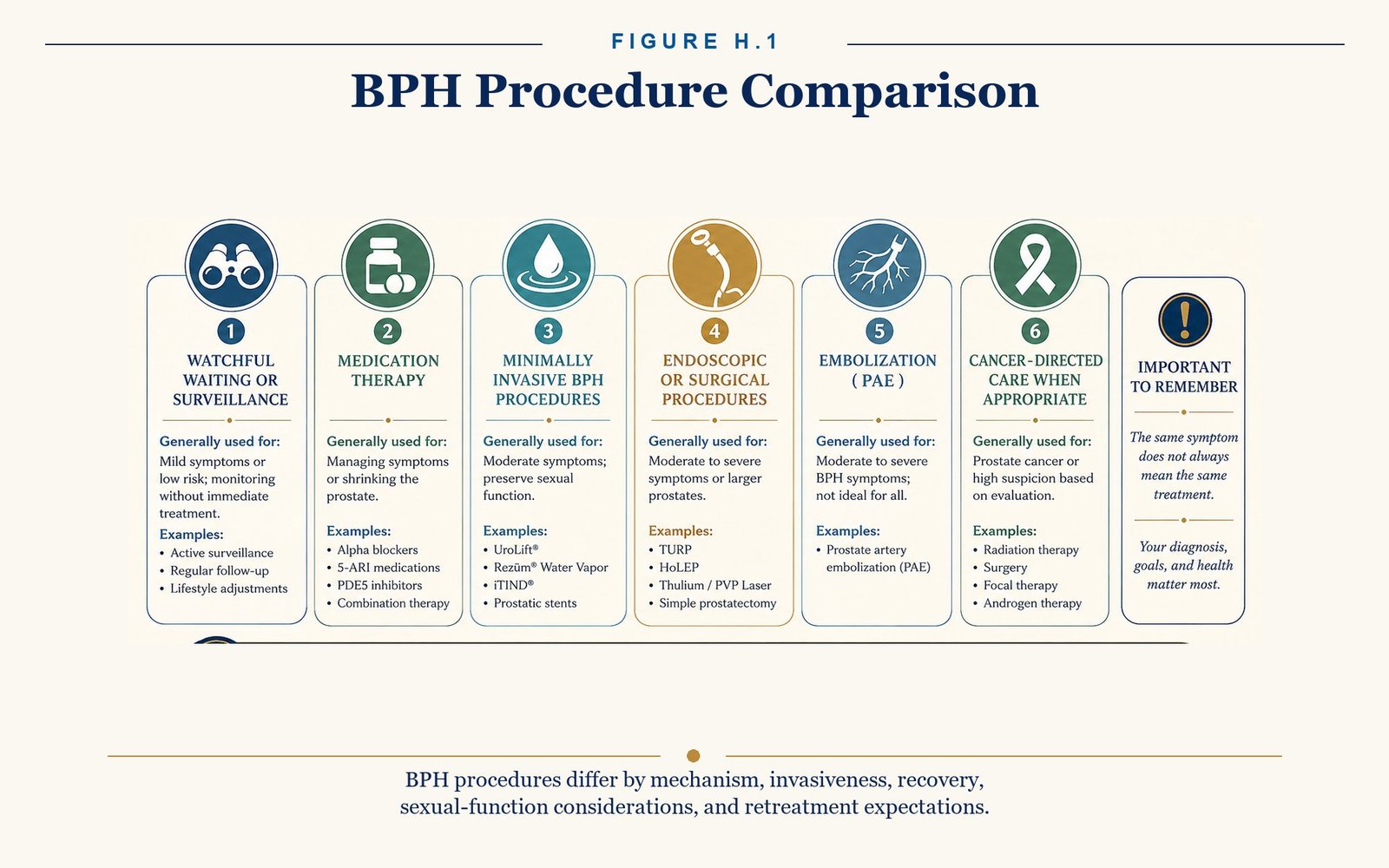
BPH Procedure Comparison. Procedures differ by mechanism, recovery, sexual considerations, and durability.
Recovery Concept
PAE does not carve open the urine channel immediately. Improvement can be gradual as the prostate responds over weeks to months. Some men have pelvic discomfort, urinary irritation, or temporary symptom changes during recovery.
Sexual Considerations
PAE is often attractive for men who want to preserve anatomy and sexual function. Because it does not cut through the urine channel, it may have advantages for ejaculation preservation in selected men. No procedure should be described as zero-risk.
Bladder Botox: A Different Target
Bladder Botox treats bladder overactivity, not prostate blockage. It is injected into the bladder muscle to reduce urgency, frequency, and urge leakage in selected patients.
Best-Fit Anatomy
Bladder Botox may be appropriate when urgency and frequency persist even after obstruction has been evaluated or treated, and when the bladder empties safely.
Recovery Concept
The procedure is usually done through a small camera. Improvement may take days to weeks.
Neuromodulation: Bladder Signaling
Neuromodulation uses nerve stimulation to improve bladder control. Examples include tibial nerve stimulation and sacral neuromodulation.
Best-Fit Anatomy
It may help selected men with persistent urgency, frequency, or urge leakage after prostate obstruction and bladder-emptying issues have been evaluated.
Recovery Concept
Recovery depends on the type of neuromodulation. Some treatments are office-based; others involve an implanted device.
Other BPH Procedures
UroLift moves selected prostate tissue aside with implants. It does not remove tissue. Ask whether the precise anatomy, including any median lobe, fits the proposed technique, and discuss symptom improvement, retreatment, and ejaculation.
Aquablation removes tissue with a robotically guided waterjet. Discuss anesthesia, bleeding management, catheter time, sexual outcomes, and how the operator’s experience applies to the planned gland size.
TURP removes obstructing tissue through the urethra. It can provide substantial relief, but has recovery and complication risks, including ejaculation changes. The technique and the patient’s anatomy influence the tradeoffs.
HoLEP uses a laser to separate obstructing tissue from the prostate’s capsule. It can be used across a broad range of gland sizes in experienced hands. Discuss temporary urinary leakage, bleeding, catheter time, and the likelihood of ejaculation changes.
GreenLight and other laser approaches treat obstructing tissue in different ways. The word laser does not identify one operation. Ask which technique is proposed, whether tissue is available for pathology, and what the durability and retreatment data show.
Simple prostatectomy removes the enlarged inner portion of the gland, rather than the entire prostate as in a cancer operation. It is an option for selected very large glands. Open, laparoscopic, and robotic approaches have different recovery considerations.
These are brief mechanism descriptions, not a ranking. Tissue-removing operations may produce stronger flow improvement than PAE; PAE may offer different bleeding, catheter, and hospital-stay tradeoffs. Treatment selection should include both the benefits and limitations of the alternatives. 5
Comparing Your Options
Ask the team to compare realistic symptom relief, improvement in emptying, recovery burden, anesthesia, sexual effects, complications, and retreatment over the same follow-up period. An attractive early result does not answer a durability question. If a clinician does not provide an option, ask whether referral for another opinion would help.
Appendix F: Questions to Ask Your Urologist

A good urology visit should not leave a man confused. You do not need to speak like a doctor. You do not need to memorize every abbreviation. You do not need to know every procedure. But you should leave the office understanding what problem is being treated, what has been measured, what the plan is, and how the doctor will know whether that plan worked.
This appendix is designed as a patient self-advocacy guide. The most important question is: Is my bladder safe? Everything else builds from there.
The Most Important Question Is my bladder safe?
This is the central BPH question. The prostate may be enlarged, but the bladder is the organ that can be damaged over time. If the bladder is emptying well, the conversation is different. If urine is being left behind, the stream is very slow, infections are recurring, stones are forming, or retention has occurred, the situation is more serious. Ask: “Is my bladder emptying safely, or is the prostate putting my bladder at risk?”
Questions About Urinary Symptoms Why am I peeing differently?
Do not accept “it is just age” as a complete answer. A weak stream, urgency, frequency, nighttime urination, and incomplete emptying may come from prostate enlargement, bladder dysfunction, infection, inflammation, diabetes, sleep apnea, constipation, medications, pelvic floor tension, or several causes together. Ask: “What do you think is causing my urinary symptoms?”
Is this from the prostate, the bladder, or both?
Many men assume every urinary problem is prostate-related. That is not always true. The bladder can be overactive, weak, irritated, or reacting to prostate blockage. Ask: “Are my symptoms mainly prostate-driven, bladder-driven, or mixed?”
Is nighttime urination damaging my sleep?
Waking up several times per night is not a minor issue. It can affect energy, testosterone, metabolism, mood, cardiovascular health, and sexual function. Ask: “Is my nighttime urination from prostate blockage, bladder irritation, sleep apnea, diabetes, fluids, alcohol, or another issue?”
Questions About Prostate Size and Shape How large is my prostate?
“Enlarged” is too vague. You should know whether the prostate is mildly enlarged, moderately enlarged, severely enlarged, or very large. Ask: “What is my prostate size in grams or cubic centimeters?”
Where am I on the Prostate Size Gauge?
A practical guide: 20 grams or less is small or normal. 20 to 40 grams is mild enlargement. 40 to 60 grams is moderate enlargement. 60 to 100 grams is severe enlargement. Over 100 grams is very large. Ask: “Where do I fall on the prostate size gauge?”
Is part of my prostate growing into the bladder opening?
This is one of the most important questions. Doctors may call this IPP or median-lobe enlargement. The plain-English issue is whether prostate tissue is bulging into the bladder opening and blocking urine like a ball valve. Ask: “Is the prostate growing into the bladder opening?”
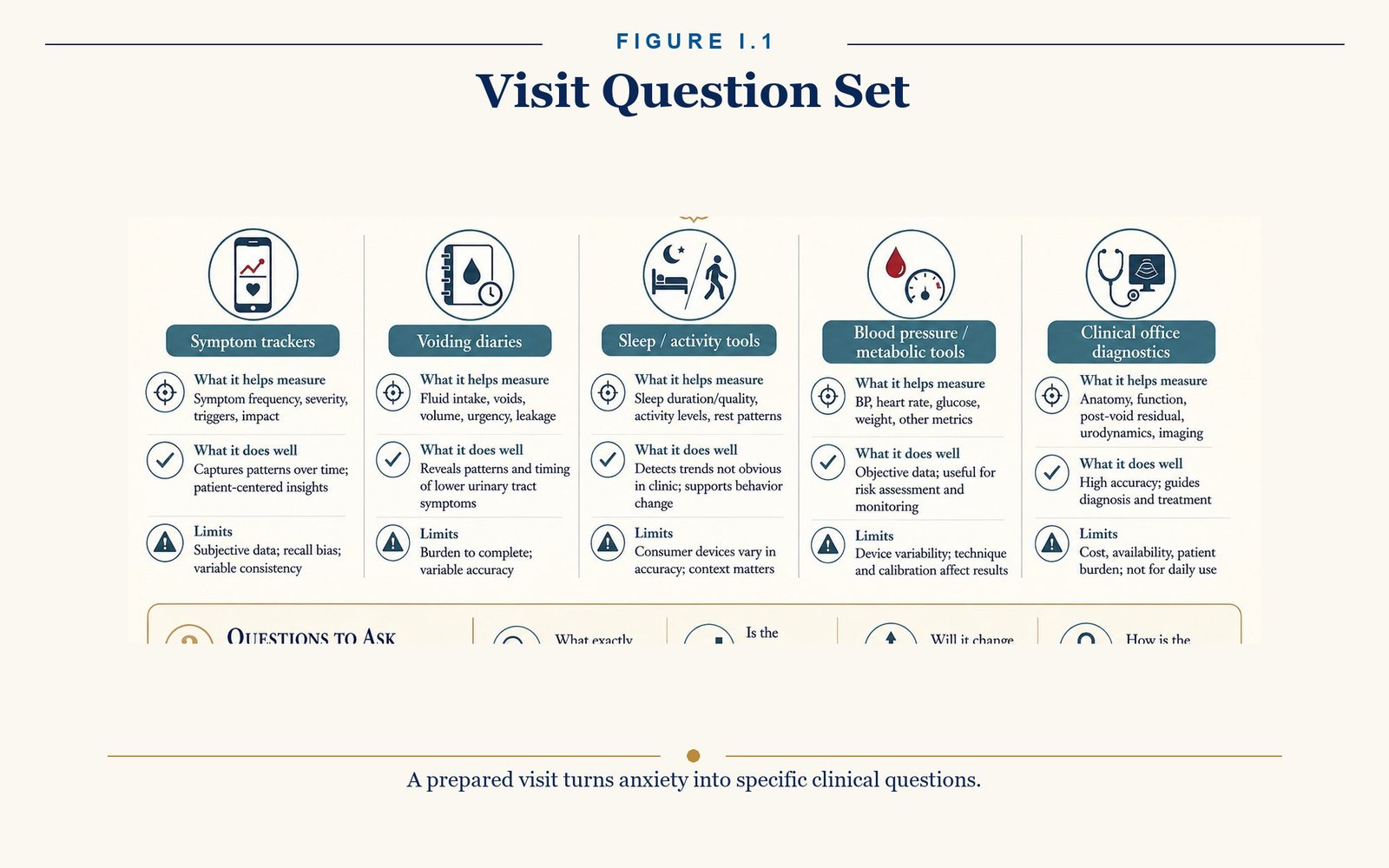
Visit Question Set. Prepared questions help men use the visit well.
Is this a ball-valve type blockage?
A prostate does not have to be enormous to cause trouble. A moderately enlarged prostate growing in the wrong direction can be very obstructive. Ask: “Is my prostate acting like a ball valve?”
Questions About Bladder Emptying How much urine is left behind after I urinate?
Doctors call this post-void residual. The plain-English meaning is how much urine remains after you think you are finished. Ask: “How much urine is left in my bladder after I urinate?”
Is the amount left behind safe?
A small amount may be acceptable. A large amount may increase risk of infection, stones, frequency, urgency, retention, and bladder damage. Ask: “Is this amount of leftover urine concerning?”
Is my leftover urine increasing over time?
Trend matters. Ask: “Is my bladder emptying getting worse compared with prior visits?”
Questions About Urine Flow How fast does my urine come out?
Doctors may call this Qmax. Patients should think of it as the maximum speed of urination. Ask: “What is my maximum urine-flow speed?”
Is my stream slow because of blockage or weak bladder muscle?
A slow stream can come from prostate blockage, weak bladder muscle, or both. Ask: “Is my slow stream from obstruction, bladder weakness, or both?”
Was the flow test reliable?
A urine-flow test is more useful if enough urine is passed during the test. Ask: “Did I urinate enough during the test for the result to be meaningful?”
Questions About Medication What does this medication actually do?
Some medications relax the prostate opening. Some slowly shrink selected enlarged prostates. Daily tadalafil can help erections and urinary symptoms in selected men. Ask: “Does this medication relax, shrink, or help erections and urinary symptoms?”
How will we know if the medication worked?
A medication should have an endpoint. Ask: “Are we judging success by symptoms, urine-flow speed, urine left behind, sleep, or quality of life?”
What are the side effects?
Prostate medications may affect blood pressure, dizziness, libido, erections, ejaculation, semen volume, and PSA interpretation. Ask: “What sexual, blood pressure, or PSA-related side effects should I know about?”
What happens if the medication only helps a little?
Partial improvement is not always enough. Ask: “If I am better but not fixed, what is the next step?”
Questions About Procedures Why does this procedure fit my anatomy?
Do not choose a procedure only because it is advertised, new, robotic, or available in one office. Ask: “Why is this the best procedure for my prostate size, prostate shape, bladder function, and goals?”
What does the procedure actually do?
Different procedures work differently. Some pull tissue aside. Some treat tissue with water vapor. Some reduce blood supply. Some remove tissue. Some treat bladder overactivity. Ask: “Does this procedure pull, shrink, embolize, heat, remove, or relax tissue?”
Does this procedure go through the urinary channel?
This matters. Most BPH procedures are performed through the penis and urinary channel. PAE is different because it treats the prostate through the blood vessels. Ask: “Is this procedure done through the urinary channel or through the blood vessels?”
Am I a candidate for PAE?
PAE is often an important option for larger prostates, prostates growing into the bladder opening, and men who want a less disruptive, anatomy-preserving approach. Ask: “Should I consider prostate artery embolization?”
Am I a candidate for Rezūm?
Rezūm may be a strong option for selected smaller or moderately enlarged prostates. Ask: “Does my prostate size and shape fit Rezūm?”
Will I need a catheter?
Catheter expectations should be discussed before the procedure. Ask: “Will I need a catheter after this treatment, and for how long?”
What symptoms may temporarily worsen?
Some procedures can cause burning, urgency, frequency, slower urination, or irritation during recovery. Ask: “What should I expect during the first weeks or months after treatment?”
What future options remain?
A good prostate plan should think beyond the next month. Ask: “If this treatment is not enough, what options would still be available?”
Questions About PSA What does my PSA mean for me?
PSA is not a cancer diagnosis. It is a risk signal. Ask: “Is my PSA appropriate for my age, prostate size, trend, and risk?”
Should we repeat the PSA?
A newly elevated PSA may need confirmation before moving to imaging or biopsy. Ask: “Should we repeat this PSA before deciding the next step?”
Could something benign be raising my PSA?
Benign enlargement, inflammation, infection, urinary retention, catheterization, and procedures can raise PSA. Ask: “Could infection, inflammation, retention, or prostate size explain this PSA?”
Do I need MRI before biopsy?
MRI can help map the prostate and identify suspicious areas. Ask: “Should I have prostate MRI before biopsy?”
Does checking PSA mean I need biopsy?
No. PSA gives information. It does not automatically commit a man to biopsy. Ask: “What would make biopsy necessary?”
If cancer is found, does that mean treatment?
No. Many low-risk prostate cancers can be monitored with active surveillance. Ask: “If cancer is low-risk, would we monitor it instead of treating it?”
If I am older, would PSA change management?
Ask whether a PSA result would change care in light of your age, health, life expectancy, prior results and preferences. A single birthday is not the whole decision.
Questions About Biopsy Why do I need a biopsy?
Biopsy should answer a real risk question. Ask: “What specific finding makes biopsy necessary?”
Will the biopsy target an MRI lesion?
If MRI shows a suspicious area, the biopsy should usually account for it. Ask: “Will you target the suspicious area seen on MRI?”
What biopsy route are you using?
Biopsy may be transrectal or transperineal. The right approach depends on patient risk, anatomy, physician experience, infection prevention, and comfort. Ask: “Why are you recommending this biopsy route for me?”
How do you reduce infection risk?
This should always be discussed. Ask: “What is your infection-prevention protocol?”
What happens if the biopsy is negative?
A negative biopsy is reassuring, but persistent risk may still need follow-up. Ask: “If the biopsy is negative, what is our follow-up plan?”
Questions After a Prostate Cancer Diagnosis What is my Grade Group?
Grade Group helps describe how aggressive the cancer appears. Ask: “What is my Grade Group?”
What is my Gleason score?
The difference between 3+4 and 4+3 matters. Ask: “Is this 3+4 or 4+3?”
How much cancer was found?
Cancer volume matters. Ask: “How many biopsy samples were positive, and how much cancer was in each?”
What risk group am I in?
Treatment depends on whether the cancer is low risk, favorable intermediate risk, unfavorable intermediate risk, high risk, or metastatic. Ask: “What risk group does this cancer fall into?”
Is active surveillance reasonable?
Low-risk cancer often does not need immediate treatment. Ask: “Can this cancer be monitored safely?”
Do I need PSMA PET?
Higher-risk cancer may need staging to look for spread. Ask: “Do I need PSMA PET before deciding treatment?”
Should genomic testing be considered?
Genomic testing may help in selected borderline cases. Ask: “Would genomic testing help decide between surveillance and treatment?”
Questions About Sexual Function Will this medication affect ejaculation?
Many prostate medications can affect semen volume or ejaculation. Ask: “Could this medication cause dry orgasm or retrograde ejaculation?”
Will this procedure affect erections or ejaculation?
This should be discussed before treatment. Ask: “What are the risks to erections, ejaculation, orgasm, and sexual confidence?”
If I have prostate cancer treatment, what happens sexually?
Surgery, radiation, focal therapy, and hormone therapy have different sexual side-effect profiles. Ask: “How will this treatment affect erections, ejaculation, orgasm, and recovery?”
Should I have a sexual-function plan after treatment?
This may include tadalafil, sildenafil, injections, vacuum devices, pelvic floor therapy, testosterone evaluation, or other strategies. Ask: “What is the plan to preserve or recover sexual function?”
Questions About Testosterone Do I truly have low testosterone?
Symptoms and labs both matter. Ask: “Was my testosterone checked properly, and do my symptoms fit?”
What is my PSA before starting testosterone?
Testosterone therapy requires prostate awareness. Ask: “What is my baseline PSA, and how will we monitor it?”
Will testosterone affect fertility?
Testosterone therapy can reduce sperm production. Ask: “Do I need fertility preservation before testosterone therapy?”
What happens if PSA rises while I am on testosterone?
PSA movement should be evaluated, not ignored. Ask: “If my PSA rises, what is the plan?”
Questions About Supplements What problem is this supplement supposed to treat?
“Prostate health” is not specific enough. Ask: “Is this supposed to improve symptoms, urine flow, PSA, inflammation, or cancer risk?”
What is the mechanism?
A supplement should not rely on vague marketing language. Ask: “How is this supposed to work?”
What endpoint improves?
A real claim should connect to a measurable result. Ask: “Does this improve symptoms, urine-flow speed, urine left behind, prostate size, or cancer outcomes?”
Is this delaying real evaluation?
This is the most important supplement question. Ask yourself: “Am I taking this instead of finding out what is wrong?”
When to Seek Another Opinion
Consider another opinion if: You are told you are fine but still cannot urinate well. You are on medication but no one has checked your bladder emptying. A procedure is recommended without explaining why it fits your anatomy.
Your PSA is dismissed without a plan. You are rushed into prostate cancer treatment without understanding the risk group. Sexual side effects are not discussed.
Only one treatment option is presented. You feel confused after the visit. A second opinion is not disrespectful. It is part of informed care.
Appendix G: Testosterone Safety Checklist
Testosterone treatment requires symptoms consistent with deficiency, appropriate laboratory confirmation, and a monitoring plan. Benefits vary, and it should not be prescribed simply to raise a number or treat nonspecific tiredness.
That means it requires a real diagnosis, a real plan, and real monitoring. The central rule is simple:
Hormones are medicine. Monitoring is not optional. This checklist is designed to help men start testosterone therapy safely, ask better questions, and understand what should be checked before and during treatment.
Confirm the Diagnosis
A man should not start testosterone only because he feels tired. Fatigue, low libido, erectile dysfunction, weight gain, depressed mood, poor sleep, and low motivation can come from many causes. Testosterone deficiency may be one of them, but sleep apnea, diabetes, depression, medications, obesity, alcohol, stress, thyroid disease, poor conditioning, and cardiovascular disease can all create similar symptoms.
A testosterone diagnosis should include symptoms and bloodwork. The AUA guideline uses a total testosterone level below 300 ng/dL as a reasonable cutoff supporting the diagnosis of low testosterone, but the number should be interpreted with the patient’s symptoms and clinical picture. Ask your doctor: “Do my symptoms and lab results both support testosterone deficiency?” 14
Check Testosterone Correctly
Confirm a low testosterone result with a second early-morning measurement on a different day before diagnosing deficiency. Other hormone tests are selected to clarify the cause or a borderline result. 8,14
Baseline PSA
A man should know his PSA before starting testosterone when age and risk make PSA relevant. The AUA testosterone guideline states that PSA should be measured in men over 40 before starting testosterone therapy to help exclude a prostate cancer diagnosis.
PSA evaluation does not establish that testosterone is risk-free. It helps identify a prostate concern before treatment and provides a baseline for follow-up.
Prostate History
Before testosterone therapy, the doctor should ask about prostate history. Has the man had prostate cancer? A biopsy? MRI? Elevated PSA? Prostatitis? BPH? Urinary retention? Prostate procedures? Family history of prostate cancer? The answer changes monitoring and risk discussion. Ask your doctor: “Does my prostate history change whether testosterone is appropriate?”
Urinary Symptoms
Testosterone should not be started in a vacuum if the man has significant urinary symptoms. If he has a weak stream, nighttime urination, urgency, incomplete emptying, retention history, or a very enlarged prostate, the prostate-bladder system should be evaluated. Testosterone may not automatically worsen urinary symptoms in every man, but untreated urinary obstruction should still be taken seriously. Ask your doctor: “Do my urinary symptoms need evaluation before testosterone therapy?”
Prostate Cancer History
Men with prior prostate cancer require individualized counseling. The AUA guideline states that men with a history of prostate cancer should be told there is inadequate evidence to quantify the risk-benefit ratio of testosterone therapy. 14
That does not mean testosterone is always impossible. It means the decision must be individualized based on the original cancer risk, treatment, PSA stability, symptoms, life expectancy, and patient goals. Ask your doctor: “Given my prostate cancer history, what are the risks and what monitoring would be required?”
Active Surveillance
For men with prostate cancer on active surveillance, testosterone safety remains uncertain. Available observational reports do not establish long-term cancer safety. This requires specialist review; Endocrine Society guidance recommends against treatment in men with prostate cancer. 8,14
Advanced or Metastatic Prostate Cancer
Men with active advanced or metastatic prostate cancer generally should not receive testosterone therapy because testosterone signaling can stimulate many advanced prostate cancers. The Endocrine Society guideline recommends against testosterone therapy in men with breast or prostate cancer, prostate nodule or induration, high PSA without urologic evaluation, elevated hematocrit, untreated severe sleep apnea, and men planning fertility in the near term, among other contraindications. Ask your doctor: “Is there any prostate cancer reason testosterone is unsafe for me?” 8
Fertility Goals
Testosterone therapy can suppress sperm production. This is one of the biggest things men are not told clearly enough. A man can feel better sexually on testosterone while his fertility worsens. If a man wants children now or may want children in the future, this must be discussed before starting.
The Endocrine Society recommends against testosterone therapy in men planning fertility in the near term. Ask your doctor: “Could testosterone reduce my sperm production, and do I need fertility preservation?”
Semen Analysis
If fertility matters, a semen analysis may be appropriate before treatment. This gives a baseline sperm count and helps guide whether testosterone therapy, alternative medications, or fertility-preserving strategies should be considered. Ask your doctor: “Should I check a semen analysis before starting?”
Alternatives When Fertility Matters
Some men who want to preserve fertility may be candidates for alternatives that stimulate the body’s own testosterone production rather than replacing testosterone directly. Options may include medications such as clomiphene or other approaches depending on the patient. Some men may use hCG under specialist supervision to help support testicular function. These approaches are not right for everyone. Ask your doctor: “Are there fertility-preserving alternatives to testosterone replacement?”
Baseline Blood Count
Testosterone can raise red blood cell levels. This is called erythrocytosis or polycythemia. If the blood becomes too concentrated, risk may increase. That is why hemoglobin and hematocrit should be checked before treatment and monitored during therapy. AUA guidance recommends measuring hemoglobin and hematocrit before offering testosterone therapy and informing patients about the increased risk of polycythemia. Ask your doctor: “What is my hematocrit before starting testosterone?”
Hematocrit Monitoring
If hematocrit rises, the prescriber should reassess the dose, formulation, treatment need, and contributing conditions such as sleep apnea. Do not manage it by repeatedly donating blood without addressing the cause.
Sleep Apnea
Untreated severe obstructive sleep apnea is a major concern before testosterone therapy. Sleep apnea can worsen fatigue, low testosterone symptoms, cardiovascular risk, nighttime urination, blood pressure, and red blood cell elevation. Testosterone may worsen sleep apnea in some men or complicate the picture.
The Endocrine Society recommends against testosterone therapy in men with untreated severe obstructive sleep apnea. Ask your doctor: “Do I need sleep apnea evaluation before starting testosterone?”
Cardiovascular Risk
Testosterone therapy should be considered in the context of cardiovascular health. A man with unstable heart disease, recent major cardiovascular events, uncontrolled risk factors, or complex medical history needs a careful discussion. Testosterone should not be used as a shortcut around proper cardiovascular evaluation. Ask your doctor: “Is my heart and vascular risk appropriate for testosterone therapy?”
Blood Pressure
Check blood pressure before and during treatment. Testosterone product warnings include increased blood pressure; review the current label for the prescribed formulation. 9
Delivery Method
Testosterone can be given in several ways. Common options include injections, gels, patches, pellets, and auto-injectors. Each has advantages and tradeoffs.
Injections are flexible but may create peaks and troughs depending on dose and schedule. Gels can be steady but require daily application and precautions to avoid transfer to others. Pellets last for months but require insertion. Auto-injectors can be convenient but may be expensive. Ask your doctor: “Which delivery method fits my life, labs, risk profile, and follow-up reliability?”
Dose and Target
More is not always better. The goal is not to chase the highest testosterone number. The goal is to improve symptoms safely while keeping labs in an appropriate range. A man who feels well at a reasonable level does not need to be pushed into excessive dosing. Ask your doctor: “What testosterone range are we targeting and why?”
Follow-Up Timing
Follow-up should be scheduled before therapy starts. The doctor should monitor symptoms, testosterone levels, hematocrit, PSA when appropriate, side effects, blood pressure, fertility concerns, and overall response. The Endocrine Society recommends monitoring testosterone therapy with a standardized plan including symptoms, adverse effects, compliance, serum testosterone, hematocrit, and prostate cancer risk during the first year after starting therapy. Ask your doctor: “When is my first follow-up after starting?”
When to Pause or Re-Evaluate
Testosterone therapy should be paused or reassessed if concerning issues arise. Reasons may include a concerning PSA rise, elevated hematocrit, severe side effects, worsening untreated sleep apnea, fertility concerns, new prostate cancer diagnosis, major cardiovascular event, or lack of benefit despite adequate levels. Ask your doctor: “What findings would make us pause or change therapy?”
Appendix H: Supplements Evidence Filter

Question 1: What Problem Am I Trying to Treat?
Before taking any prostate supplement, define the problem. Is the goal to improve a weak stream? Reduce nighttime urination? Lower urgency? Treat inflammation? Reduce prostate size? Improve PSA? Prevent cancer? Improve sexual function? Support general health? Those are not the same problems.
A supplement that claims to support prostate health may not tell you which problem it actually treats. That is the warning sign. If the problem is vague, the outcome will be vague.
A man should not take a supplement because the word prostate is printed on the bottle. He should know what symptom, measurement, or risk factor the product is supposed to improve. Ask: “What specific problem is this supposed to treat?”
Question 3: What Endpoint Improves?
An endpoint is the measurable result. For urinary symptoms, meaningful endpoints may include fewer nighttime trips to the bathroom, better symptom score, faster urine flow, less urine left behind after urination, smaller prostate size, fewer infections, lower retention risk, or better quality of life.
For cancer prevention, the endpoint should be actual cancer outcomes, not vague antioxidant theory. For PSA claims, the endpoint should clarify whether the supplement changes cancer risk, inflammation, prostate size, or simply creates confusion.
A supplement should not be judged only by whether it sounds plausible. It should be judged by what improves. Ask: “What measurable result should improve if this works?”
Question 4: Does It Improve Urinary Symptoms?
Many prostate supplements are marketed for urinary symptoms. The most common claim is that they help men urinate better. That should lead to a practical question: how much better?
Does the man wake up less often? Does the stream improve? Does urgency improve? Does the bladder empty better? Does the symptom score improve more than placebo?
Saw palmetto is the classic example. It has been used for years for urinary symptoms from benign prostate enlargement. But NCCIH summarizes that a 2023 review of 27 studies found saw palmetto alone provides little or no benefit for BPH symptoms. Ask: “Does this supplement actually improve urinary symptoms in good studies?” 10
Question 10: Does It Reduce Prostate Cancer Risk?
Cancer-prevention claims deserve strict scrutiny. The supplement industry often uses antioxidant language to suggest cancer protection. But a theory is not proof. High-dose isolated supplements can behave differently from nutrients in food.
Selenium and vitamin E are cautionary examples. The National Cancer Institute’s SELECT materials report no prostate cancer prevention benefit from selenium or vitamin E supplementation, and later findings raised concern that vitamin E may increase prostate cancer risk. A man should not take a supplement for prostate cancer prevention unless the claim is supported by meaningful human outcomes. Ask: “Does this reduce actual prostate cancer risk, or is it only a theory?” 11
Question 13: Is It Safe With My Medications?
Supplements can interact with medications. Some may affect bleeding risk. Some may interact with blood pressure medications, blood thinners, diabetes medications, hormone therapies, anesthesia, or prostate medications. Some may affect liver metabolism. A man should not assume a supplement is safe because it is natural.
Natural does not mean risk-free. Ask your doctor: “Could this interact with my medications or procedures?”
Appendix I: Visit Preparation Sheet
Bring this sheet to your urology visit or use it to organize your thoughts before the appointment.
Use the spaces below to prepare for a visit. Record symptoms and questions; your clinician decides which evaluation is appropriate.
Your Main Goals
My three main concerns: ______________________________________________
The change I most want help with: ____________________________________
Symptom History
When symptoms began: __________________ How they have changed: __________________
Daytime trips: __________ Nighttime trips: __________ Leakage or urgency: __________
Weak stream, trouble starting, straining, pain, or stop-and-start flow: __________________
Prostate and Bladder Records
Prior retention, catheter, infection, stones, blood in urine, or procedures: __________________

Visit Preparation Sheet. Organized information improves the prostate visit.
Known prostate volume, unit, method and date: __________________
Known urine-flow and residual measurements, with dates: __________________
PSA and Cancer Evaluation
Bring dated PSA results, MRI reports, biopsy reports, and any surveillance or treatment plan. Record family history and what you were told remains uncertain.
PSA results and dates: __________________ MRI or biopsy findings: __________________
Medicines and Supplements
Bring an updated list or the bottles. Include name, dose if known, why you take it, benefit, and side effects. Include prescription drugs, over-the-counter medicines and supplements. Do not stop a prescribed medicine to complete this sheet.
My current list: _____________________________________________________
Sexual Function and Fertility
Changes in erection, ejaculation, orgasm, or pain: __________________
Whether future children matter to me: __________________
Sleep, Bowel and Daily Habits
Note snoring, nighttime waking, constipation, fluid timing, caffeine, alcohol, and other changes that may contribute. These observations help the clinician decide what deserves evaluation.
My observations: ____________________________________________________
Questions for the Visit
What is the likely cause, and what remains uncertain? Which test would change the next decision? What can observation, medicine, or a procedure realistically improve? What side effects and recovery should I expect? What would make us change course?
My additional questions: _____________________________________________
Plan After the Visit
Next step: __________________ Follow-up date: __________________
How we will judge response: __________________ Who to contact with problems: __________________
Symptoms requiring earlier contact: __________________________________
Keep your completed sheet with your medical records. Share it with your clinician rather than a publisher. A record helps you prepare; it does not substitute for urgent medical care or a diagnosis.