
Prostate Health
What Does an Elevated PSA Mean?
An illustrated guide to PSA results: why context matters, what to bring to your appointment, and questions to ask before the next test.
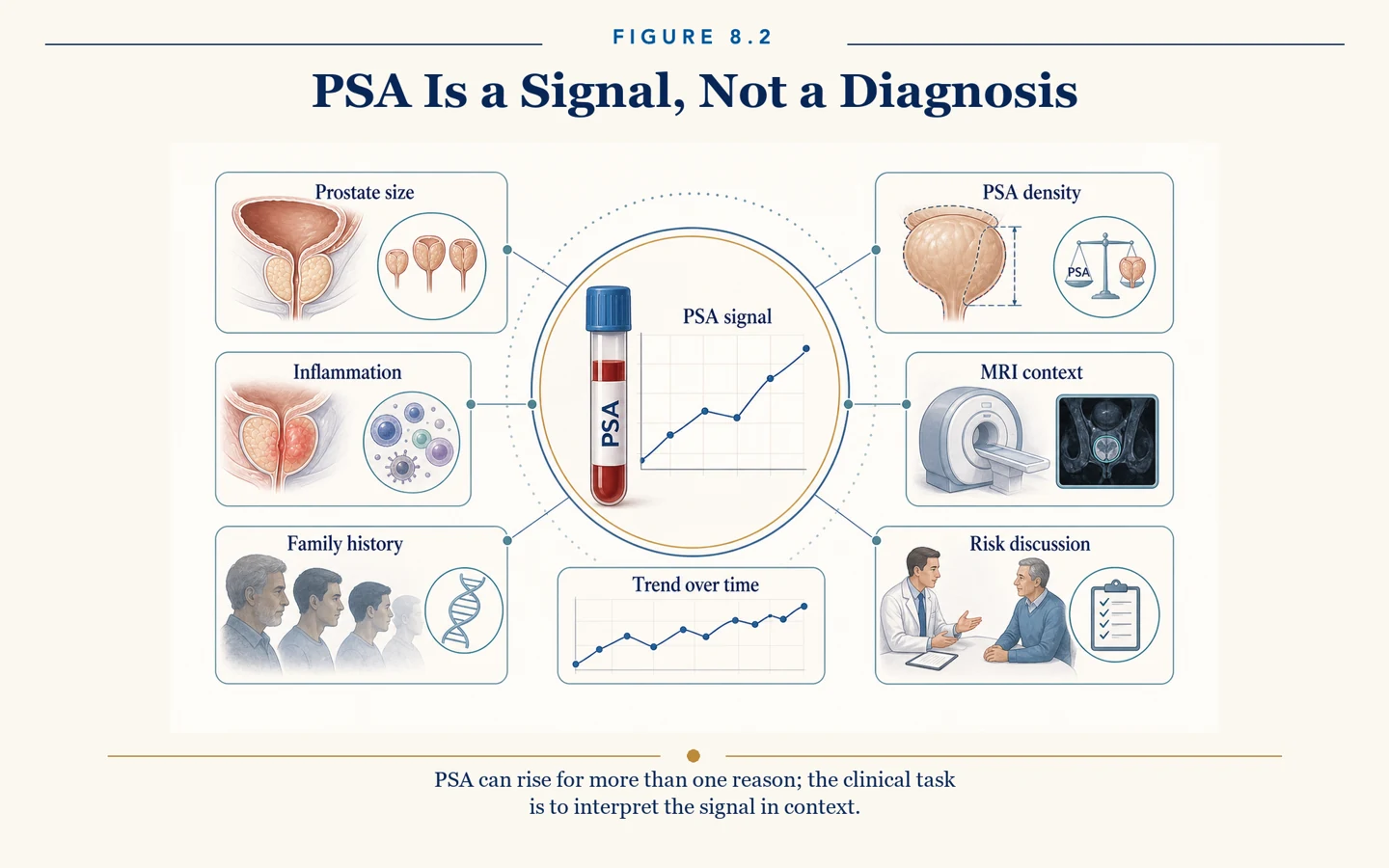
What an elevated PSA can—and cannot—tell you
PSA is a protein made by prostate cells. A blood test measures its concentration. Cancer can raise PSA, but so can benign enlargement and inflammation. There is no single result that proves or excludes prostate cancer. An unexpected value needs interpretation rather than a diagnosis made from the number alone.1
Read the figure in context
The illustration from Prostate Unlocked places the blood result in the middle and the questions around it. Start with the reason for testing: screening, investigating symptoms, and monitoring known cancer are different situations.
Text explanation of the figure
- Prostate size and inflammation: more than one process can contribute to a raised result.
- Family history: tell your clinician which relatives had prostate cancer and their ages at diagnosis.
- Trend over time: bring previous reports with their dates and units. The diagram’s lines are illustrative, not a patient’s results or a diagnostic cutoff.
- PSA density: the figure invites discussion of PSA relative to prostate volume; it is not a do-it-yourself risk score.
- MRI context: imaging can become part of an assessment when appropriate.
- Risk discussion: the decision depends on the overall clinical picture and the person’s priorities.
A clinician may repeat an unexpected result or recommend further assessment, which can include additional blood or urine tests, imaging, or biopsy. Screening also has tradeoffs: earlier detection may help, while false alarms and diagnosis of cancers that would never cause harm can lead to unnecessary procedures. Talk through those tradeoffs before choosing a testing plan.1
Bring questions, not just a number
- Why was this test ordered, and what question are we trying to answer?
- How does this result compare with my previous results?
- Could a recent illness, procedure, activity, or medication affect interpretation?
- What would repeating the test change?
- If you recommend another test, how would its result change the next step?
- When should I follow up, and who will contact me with the plan?
Keep a copy of the report, a medication list, and a short symptom timeline. An online guide is most useful when it helps you leave the visit with a clear explanation and an agreed next step.
1 Clinical background: National Cancer Institute, Prostate-Specific Antigen (PSA) Test.
Sources and further reading

Explore Prostate Unlocked
Continue with the book and use this guide to prepare questions for your clinician.
View book and editions →For general education. This guide does not provide a diagnosis or replace individual medical advice. Discuss testing and treatment decisions with your clinician.