October 2026 English edition · Evidence reviewed through October 3, 2026 · David Shusterman, MD
Appendix H: Special Stone-Former Populations
Some patients require a lower threshold for evaluation, a different imaging sequence, modified medication choices, or more intensive metabolic testing. Standard advice should not be applied mechanically.
Children and Adolescents
A first stone in a child deserves attention to family history, anatomy, infection, nutrition, medications, and inherited disorders. Radiation minimization is particularly important. Fluid and dietary recommendations must support growth and should be designed with pediatric clinicians and dietitians. Recurrent stones, nephrocalcinosis, cystine stones, or an unusual composition may justify genetic evaluation.
Solitary Kidney, Transplant, and Chronic Kidney Disease
A patient with one functioning kidney has less redundancy if drainage is impaired. Transplant kidneys may present atypically because of altered innervation and anatomy. Chronic kidney disease changes safe fluid, potassium, citrate, diuretic, and analgesic decisions. These patients should not adopt high-fluid or high-potassium plans without individualized guidance.
Pregnancy
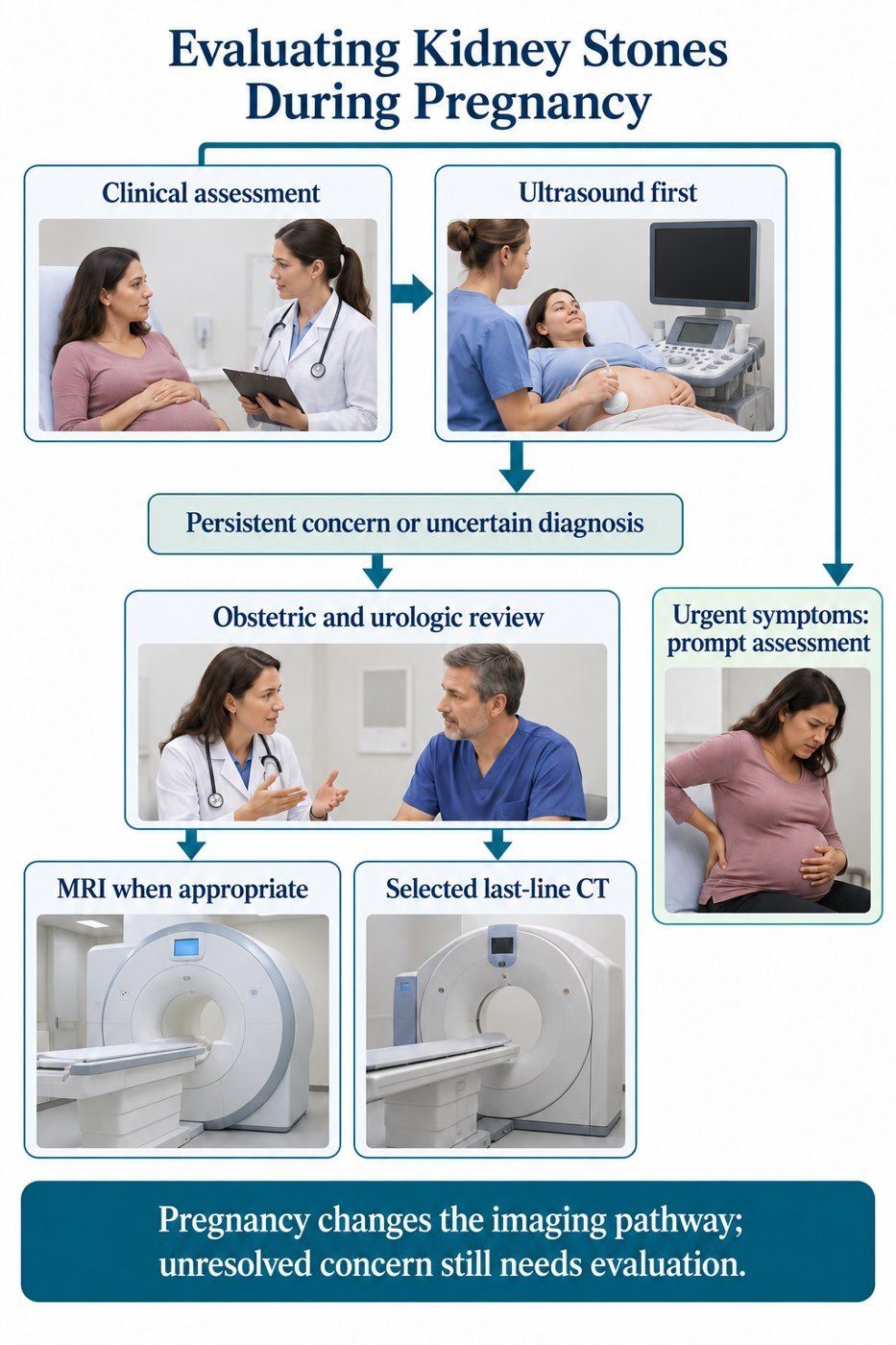
Pregnancy changes urinary drainage and limits medication and imaging choices. Ultrasound is generally the initial imaging approach for suspected stones, with additional imaging selected according to the clinical situation and local expertise. Fever, persistent vomiting, impaired renal function, or suspected infected obstruction requires urgent multidisciplinary care involving obstetrics, urology, radiology, and anesthesia as needed. NSAIDs, alpha-blockers, and other medications require pregnancy-specific review rather than routine use.
Evaluating Kidney Stones During Pregnancy
Bariatric Surgery, Inflammatory Bowel Disease, Ileostomy, and Chronic Diarrhea
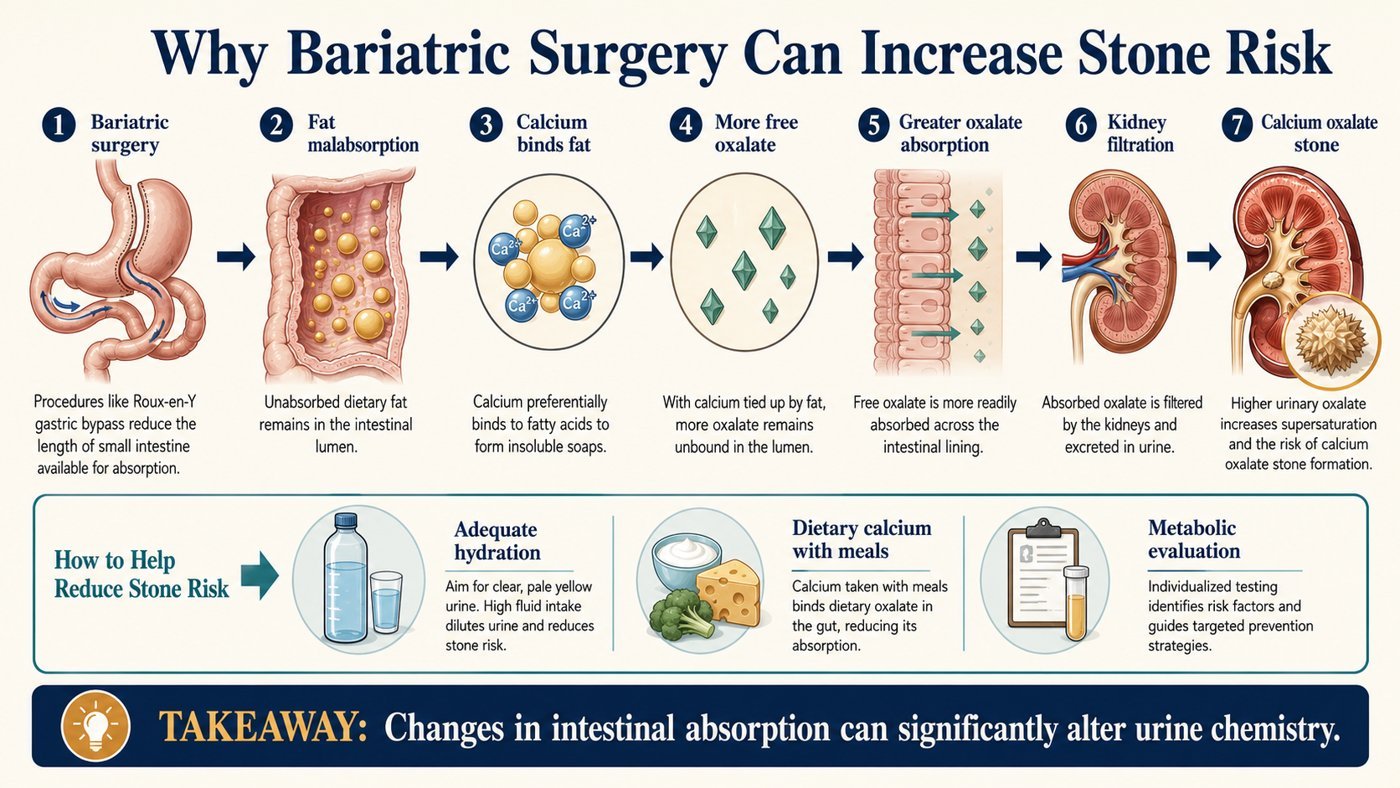
Fat malabsorption can bind intestinal calcium, leaving more free oxalate available for absorption. Diarrhea also lowers urine volume and can reduce citrate through bicarbonate loss. The resulting pattern may include enteric hyperoxaluria, low urine volume, and acidic urine. Management may involve meal-time calcium, lower oxalate exposure, fluid and electrolyte planning, citrate therapy, and treatment of the underlying gastrointestinal disorder.
Why Bariatric Surgery Can Increase Stone Risk
Recurrent Urinary Infection
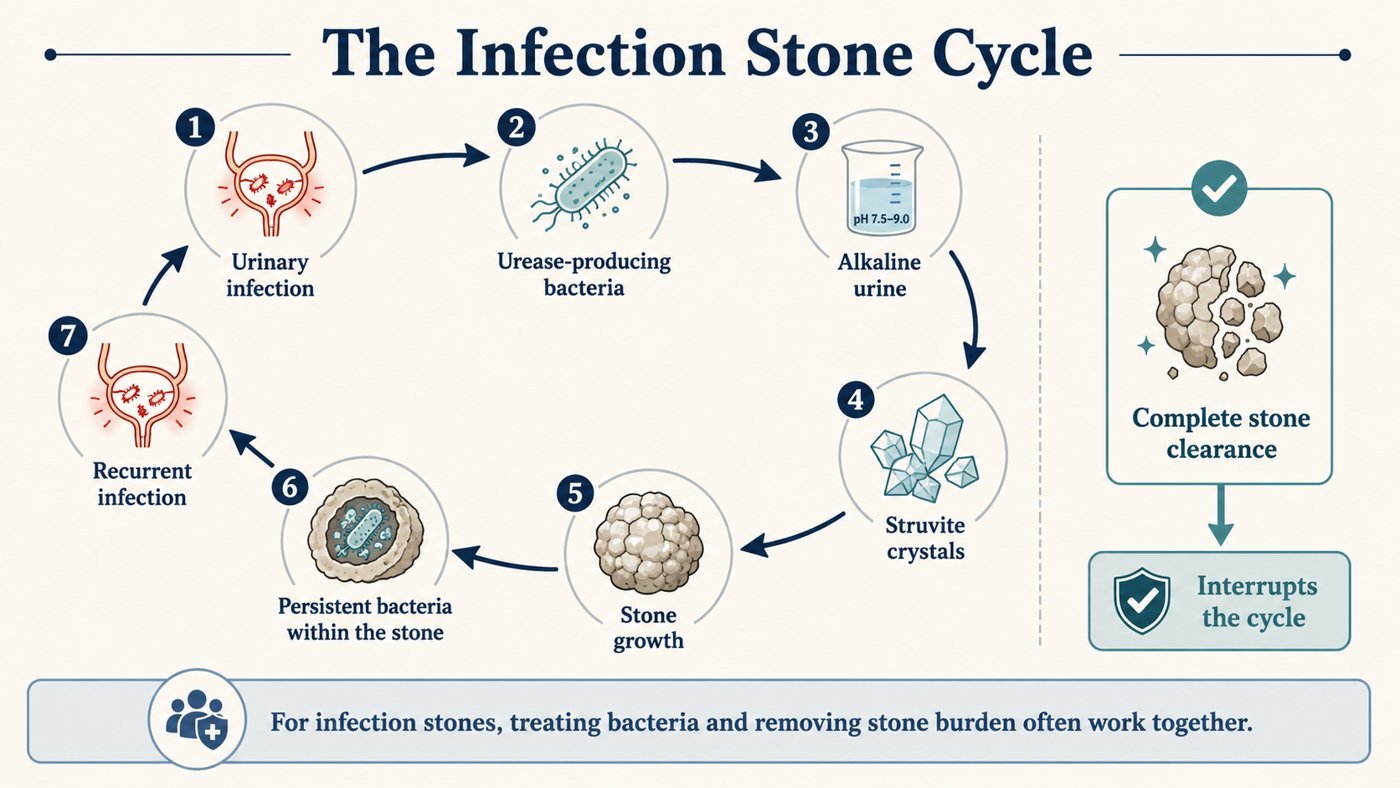
Infection stones require more than standard dietary prevention. Cultures, drainage status, stone clearance, residual fragments, and anatomic contributors must be addressed. Repeated empirical antibiotics without determining whether infected stone material remains can fail.
The Infection Stone Cycle
Primary Hyperparathyroidism and Other Endocrine Disorders
Elevated or high-normal serum calcium in a recurrent calcium-stone former may warrant repeat calcium testing and parathyroid hormone assessment. Treating the endocrine source can be more important than escalating dietary restriction. Distal renal tubular acidosis, gout, diabetes, and metabolic syndrome also change the interpretation of urine pH and stone composition.
Cystinuria and Other Genetic Stone Disorders
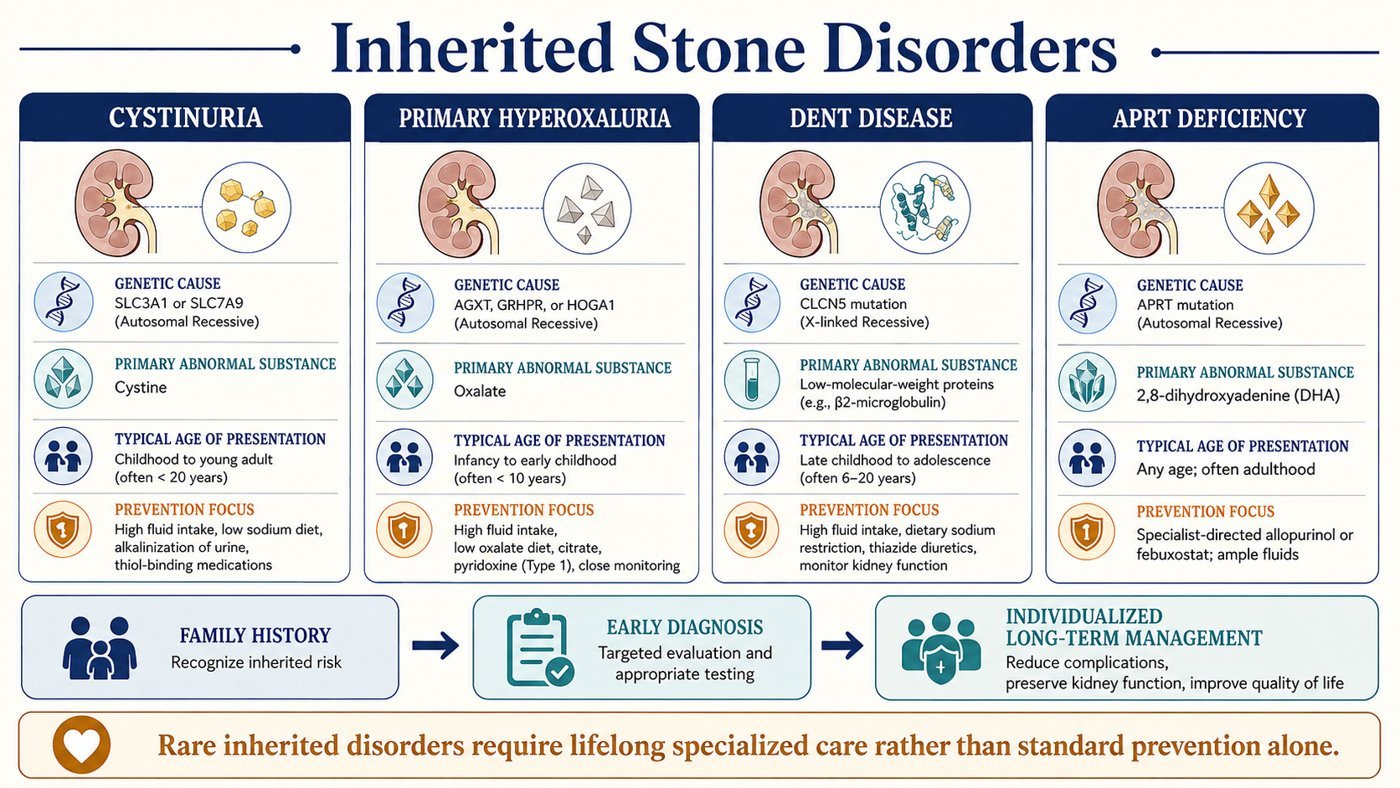
Young age at onset, bilateral or recurrent stones, nephrocalcinosis, family clustering, unusual stone composition, or severe recurrence should raise suspicion for inherited disease. Cystinuria often requires exceptionally high urine volume, sodium restriction, urine alkalinization, and specialist medications. Primary hyperoxaluria and other rare disorders need specialized testing and coordinated care.
Inherited Stone Disorders
Accessible figure description — APRT deficiency: the APRT gene is inherited in an autosomal recessive pattern. The stone substance is 2,8-dihydroxyadenine (DHA), not uric acid. Symptoms can begin at any age, including adulthood. Care centers on specialist-directed allopurinol or febuxostat and appropriate fluid intake. Urine alkalinization is not an effective treatment for DHA stones. Low-purine dieting is not a substitute for effective treatment. Source: Edvardsson, Sahota and Palsson, GeneReviews, Adenine Phosphoribosyltransferase Deficiency, https://www.ncbi.nlm.nih.gov/books/NBK100238/.
Medication-Associated Stones
Topiramate and other carbonic anhydrase inhibitors can raise urine pH and lower citrate. High-dose vitamin C can increase oxalate in susceptible patients. Some antivirals and other drugs can crystallize directly. The correct response is medication reconciliation and risk-benefit discussion, not abrupt discontinuation of necessary therapy.
When the Standard Protocol Is Not Enough
Pregnancy changes imaging, medication, and procedural thresholds. Ultrasound is the initial imaging modality, physiologic hydronephrosis can complicate interpretation, and obstetric causes of pain must remain in the differential. Medication choices require gestational consideration. Infection, refractory pain, vomiting, threatened renal function, or obstruction of a solitary kidney require urgent multidisciplinary management. When intervention is necessary, ureteroscopy or drainage may be used depending on gestational age, anatomy, infection, and local expertise.
Pediatric stone disease warrants a lower threshold for identifying a metabolic or genetic driver. Children have decades of recurrence risk ahead of them, and repeated radiation has greater cumulative implications. Family history, diet, congenital anatomy, infection, bowel disease, and inherited disorders deserve structured evaluation. Fluid and dietary prescriptions must be adjusted for body size and growth; an adult protocol should not simply be miniaturized without pediatric guidance.
Bariatric surgery, inflammatory bowel disease, ileal resection, chronic diarrhea, and ileostomy can produce a distinct chemical problem. Fat malabsorption leaves calcium bound to fatty acids, freeing oxalate for intestinal absorption and causing enteric hyperoxaluria. Diarrhea also reduces urine volume and can lower citrate through alkali loss. These patients may need calcium with meals, careful oxalate management, aggressive but tolerable hydration, and treatment of the underlying gastrointestinal condition. Generic advice to avoid all calcium can be particularly harmful.
Gout and uric acid stones overlap but are not identical. A patient can form uric acid stones without gout and can have gout without stones. Urine pH is often the dominant factor in uric acid crystallization. Serum uric acid, urinary uric acid, metabolic health, diet, kidney function, and medication indications must be interpreted together.
Hyperparathyroidism should be considered in recurrent calcium stone formers with elevated or high-normal serum calcium, hypercalciuria, osteoporosis, or nephrocalcinosis. Definitive treatment of primary hyperparathyroidism can change stone risk more profoundly than another round of generic dietary advice. Calcium phosphate stones and persistently alkaline urine should also prompt evaluation for distal renal tubular acidosis and medication effects.
Cystinuria requires lifelong specialist management. The fluid target is often higher than for ordinary calcium stone prevention, urine alkalinization must be monitored, and sodium reduction can reduce cystine excretion. Thiol drugs may be necessary when conservative measures do not control cystine concentration. Because recurrence can be aggressive, residual fragments and follow-up imaging deserve particular attention.
Recurrent infection stones require complete evaluation of the infection-stone cycle. Culture-directed antibiotics may control acute infection, but a colonized stone can perpetuate bacterial persistence. Structural obstruction, foreign material, incomplete emptying, and residual stone burden must be addressed. A sterile culture after antibiotics does not necessarily prove that the stone reservoir has been eliminated.
Chronic kidney disease changes nearly every prescription. Fluid targets may need adjustment in patients with heart failure or advanced renal impairment. Potassium citrate can be hazardous when potassium handling is impaired. Thiazide response and electrolyte risk vary with kidney function. Imaging contrast decisions, analgesics, antibiotic dosing, and intervention thresholds require individualized planning. Protecting renal function means avoiding both untreated obstruction and indiscriminate treatment.
Topiramate and related carbonic anhydrase inhibitors can raise urine pH and lower citrate, increasing calcium phosphate risk. Other medications can crystallize directly in urine. The medication list should therefore be part of every recurrent-stone evaluation. The goal is not reflexive discontinuation but a risk-benefit discussion with the prescribing clinician, consideration of alternatives, and chemistry-directed prevention when the medication remains necessary.
High-Heat Occupations and Athletes
Outdoor workers, chefs, military personnel, endurance athletes, and people using saunas can lose large volumes through sweat. Their prevention plan should be based on urine output and measured weight change when practical, with attention to electrolytes during prolonged exertion. A rigid water-only rule may be inappropriate for extended heat exposure, while routine high-sugar sports drinks are unnecessary for short, low-intensity exercise.
The special-population rule is simple: the more limited the physiologic reserve or the more unusual the stone biology, the less appropriate generic advice becomes.