October 2026 English edition · Evidence reviewed through October 3, 2026 · David Shusterman, MD
Appendix J: The Annual Stone-Free Maintenance Plan and Worksheets
Stone prevention becomes durable when it is converted from a crisis response into a maintenance system. The schedule below is a framework, not a universal mandate. High-risk stone formers require closer monitoring; low-risk patients with stable chemistry may need less.
The Annual Review
Review interval symptoms, emergency visits, passed stones, procedures, infections, medications, supplements, weight change, bowel changes, diet, occupation, heat exposure, and family history updates. Measure blood pressure and reassess cardiometabolic health because hypertension, diabetes, obesity, gout, and kidney function intersect with stone risk.
Blood testing may include creatinine/eGFR, electrolytes, calcium, bicarbonate, uric acid, and other studies guided by stone type and medication use. Parathyroid hormone is considered when serum calcium or the clinical pattern raises suspicion. Potassium and kidney function require particular attention in patients using potassium citrate, thiazide-type medications, or other agents that alter electrolytes.
Repeat 24-hour urine testing is most useful when it can change management: after a significant intervention, when stones recur, when adherence or medication effect is uncertain, or at intervals appropriate to the patient’s risk. Repeat stone analysis when composition may have changed.
Imaging should minimize cumulative burden while still answering the clinical question. Ultrasound and plain radiography can be useful in selected follow-up settings, while low-dose noncontrast CT may be needed when exact stone burden, location, or treatment planning cannot be established otherwise. Pregnancy, pediatric age, obesity, stone radiopacity, and prior imaging all affect the choice.

Annual Stone-Free Follow-up
Monthly Self-Audit
Fluid — Is urine generally pale and is the prescribed output goal being met? When off track: rebuild drinking cues; adjust for heat and exercise; confirm that higher intake is medically safe.
Sodium — Are restaurant and packaged foods dominating the week? When off track: audit labels and replace the largest sodium source first.
Calcium-oxalate pairing — Are high-oxalate foods eaten alone? When off track: pair with an appropriate food-based calcium source when indicated.
Medication — Are doses missed or causing side effects? When off track: contact the prescribing clinician rather than silently stopping.
Metabolic health — Are weight, blood pressure, glucose, or activity worsening? When off track: re-engage primary care and the prevention plan.
Follow-up — Is imaging or urine testing overdue? When off track: schedule before the next crisis.
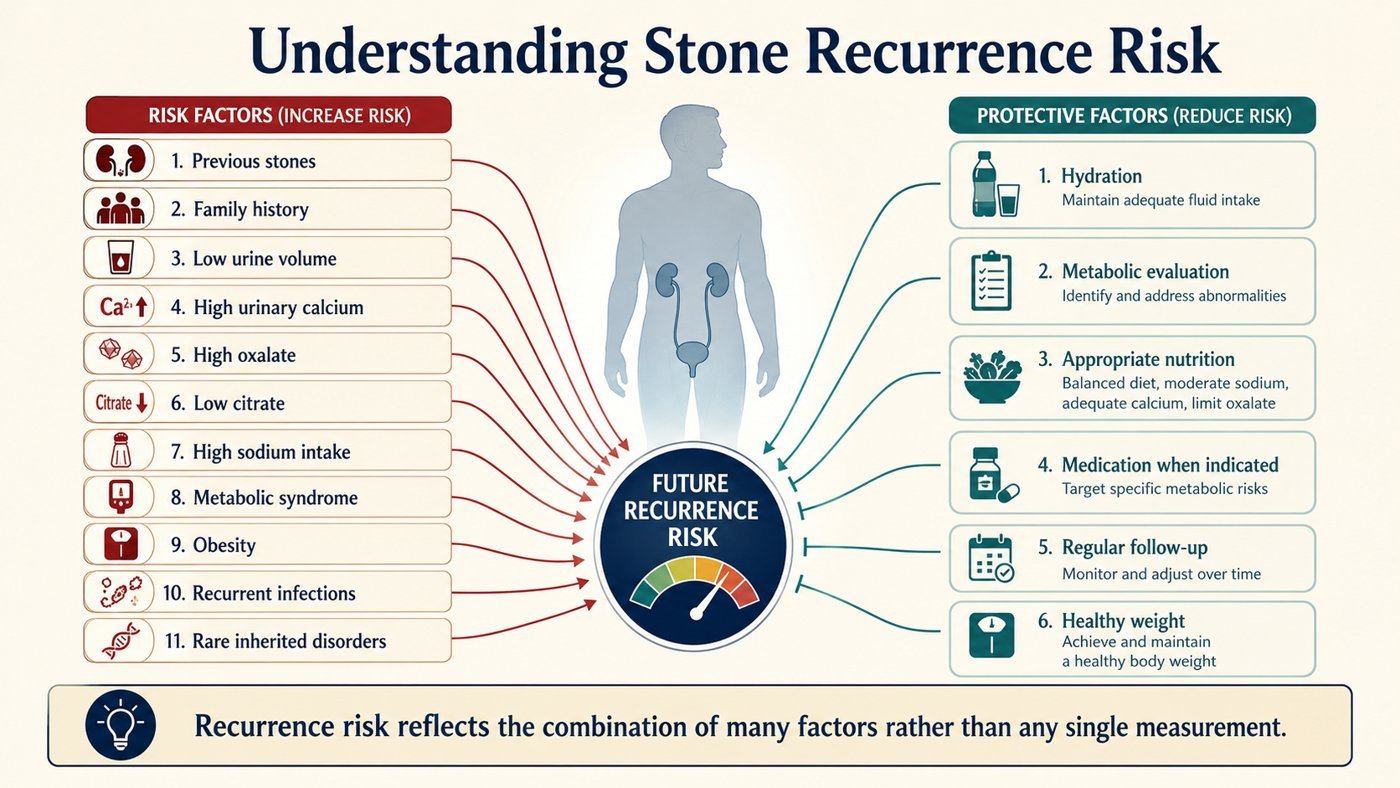
Understanding Stone Recurrence Risk
Daily Fluid Tracker
Wake to 10 a.m.: record planned fluid, actual fluid, and context (commute, caffeine, medications).
10 a.m. to 2 p.m.: record planned fluid, actual fluid, and context (meetings, clinical work, bathroom access).
2 p.m. to 6 p.m.: record planned fluid, actual fluid, and context (exercise, heat, travel).
6 p.m. to bedtime: record planned fluid, actual fluid, and context (dinner sodium, alcohol, overnight balance).
Stone Episode Timeline
Record onset, pain migration, temperature, vomiting, urine output, medication timing, clinician contacts, imaging, laboratory results, and final stone passage or procedure. A reliable timeline reduces repeated imaging and improves future decisions.
24-Hour Urine Comparison
Volume: log baseline and follow-up values side by side; the target is higher to individualized goal, driven by fluid schedule.
Calcium: log baseline and follow-up values side by side; the target is lower if elevated, driven by sodium reduction, medication when indicated.
Oxalate: log baseline and follow-up values side by side; the target is lower if elevated, driven by meal-time calcium, oxalate review, bowel management.
Citrate: log baseline and follow-up values side by side; the target is higher if low, driven by diet, alkali therapy when indicated.
Sodium: log baseline and follow-up values side by side; the target is lower if excessive, driven by packaged and restaurant food reduction.
pH: log baseline and follow-up values side by side; the target is stone-specific range, driven by alkali or other targeted therapy.
Supersaturation: log baseline and follow-up values side by side; the target is lower, driven by combined effect of the plan.
Questions for the Urologist
What stone type do I form? Was the stone analyzed? What is my dominant urine abnormality? Is there an endocrine, gastrointestinal, infectious, genetic, or medication-related cause? What is my personalized urine-volume target? Which test will prove that the intervention worked? What symptoms require urgent evaluation? What imaging strategy minimizes radiation while still protecting the kidney?
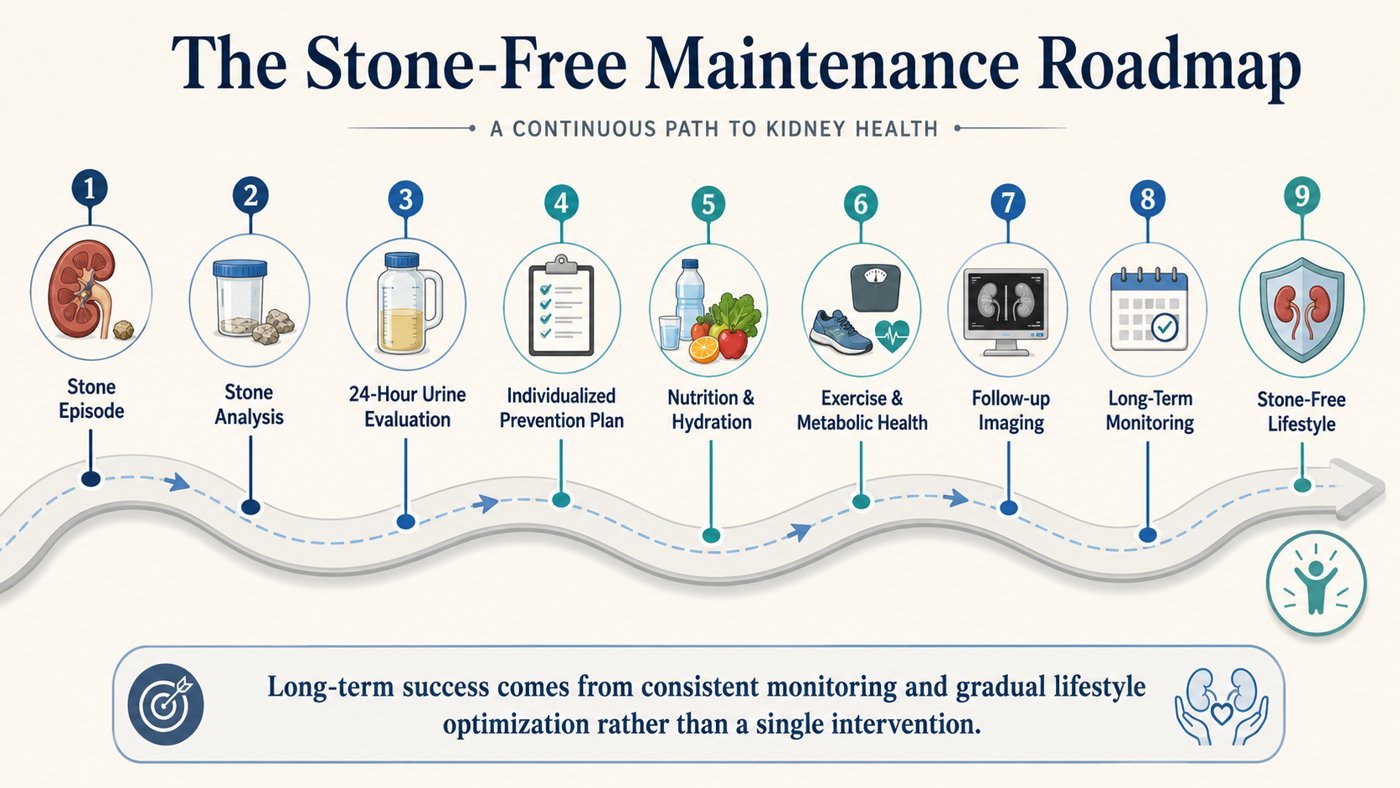
The Stone-Free Maintenance Roadmap
The maintenance plan succeeds when it becomes ordinary. The objective is not constant anxiety about every meal or every urine color. It is a small number of measurable habits, periodically validated by objective data.
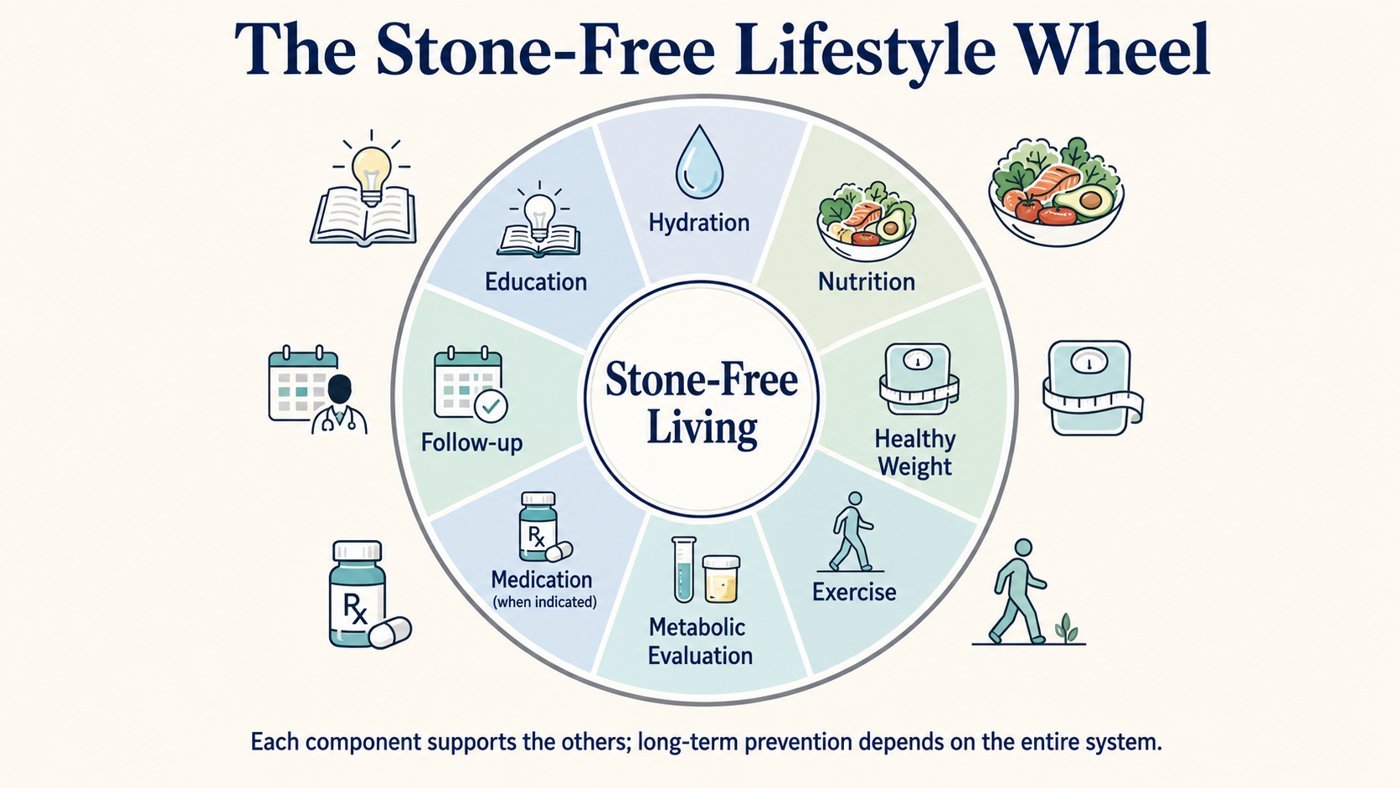
The Stone-Free Lifestyle Wheel