
Weight & Behavior
The See-Food Reflex: Why You Eat With Your Eyes, Not Your Stomach
6 min read
You walk into the break room and see a box of donuts. You didn't come in hungry. You didn't even think about food until that moment. But now you're staring, already deciding which one you'd pick. That moment — when sight becomes desire — has a name.
We call it the see-food reflex, and understanding it changes everything about why diets fail. Because when people say "I have no willpower," what they're usually describing isn't a character flaw. It's an unbroken chain of conditioned responses to food cues — and those cues are, quite literally, engineered to be hard to resist.
Cravings often start in your eyes
Unlike true hunger, which begins in the gut, a great many cravings begin with sight. When you see a burger, a cookie, or a slice of pizza, your brain's reward circuitry activates — before you smell it, before you consciously decide you want it. Remarkably, this happens even when you're already full. It's not a craving born from need. It's a craving born from exposure.
And in a modern environment, exposure is relentless: commercials, social media, billboards, an open fridge, a coworker's lunch. Each one is an invitation for your brain to say, "Eat now." You don't have to feel hungry for the reflex to fire. You just have to see.
The instant evaluation loop
When your eyes catch food, a rapid chain reaction runs in under a second: visual processing identifies it as food, memory asks "do I like this? did it feel good before?", and the dopamine system says "let's chase that again." Only after all of that do you consciously feel the craving. It isn't thoughtful. It's reflexive. And unless you learn to interrupt it, the reflex runs the show.
You're not broken. You're well-trained — by a world that profits from your cravings.
Delay, disrupt, decide
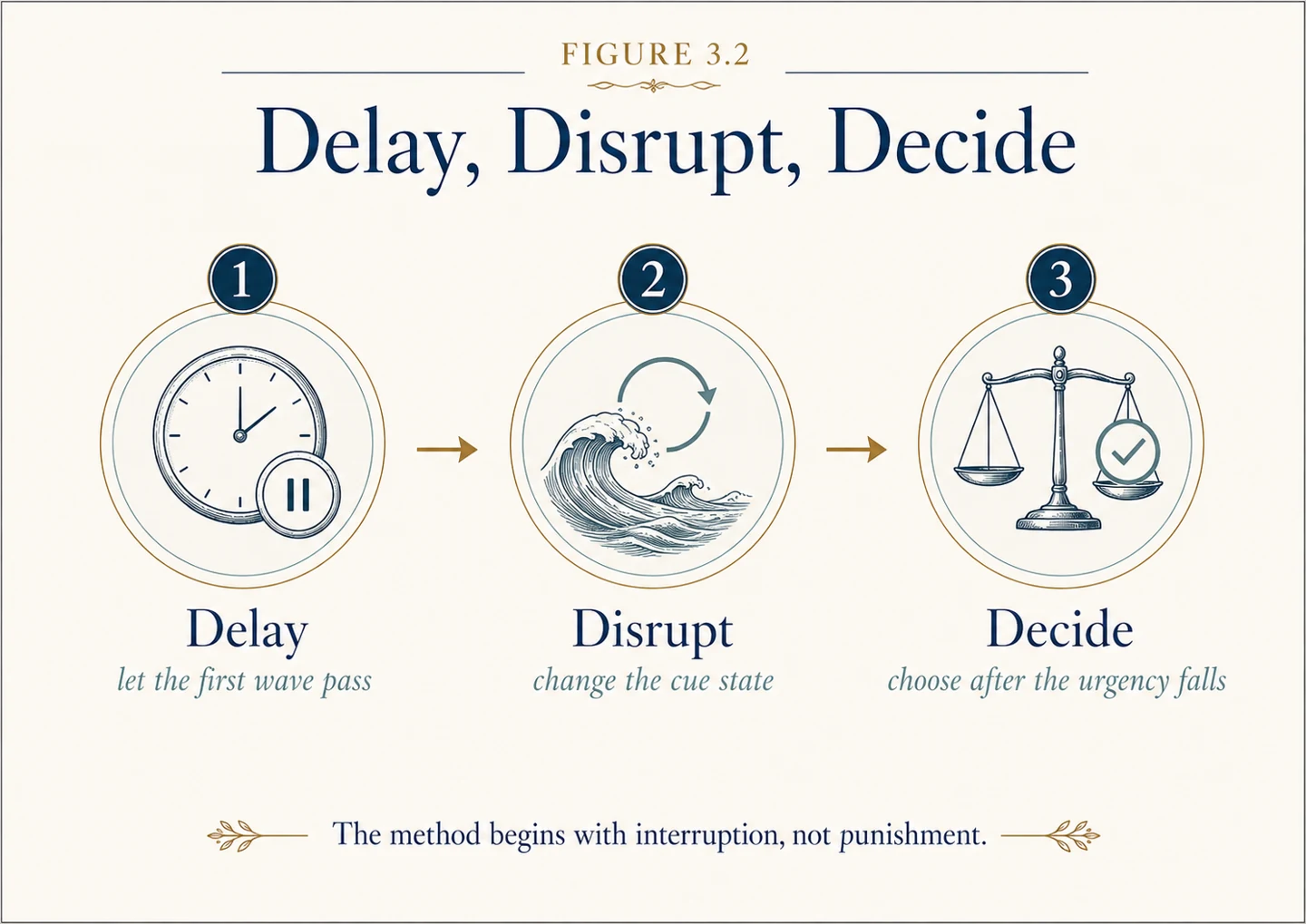
The old reflex says: eat now. The alternative is a new one, and it fits in the few seconds between impulse and action:
- Delay. Don't decide in the first ten seconds. Let the urge crest like a wave — it will pass. You are not your reflex.
- Disrupt. Engage your body or mind: drink water, step away, start a conversation. Break the loop before it completes.
- Decide. After the wave passes, make a conscious choice. Are you actually hungry? Do you want this? Will it serve what you're after?
This takes only a few minutes — but that space is where your power lives. And every time you see food and don't eat it, you're teaching your brain a new pattern: food is not an emergency. Food is a choice.
For people using GLP-1 medications like Ozempic, this same window opens chemically — the drug dulls the urgency of that first craving, creating a pause where the reflex can be rewired. But medication or not, the skill is the same, and it's learnable. You're becoming someone who can see food… and simply not reach. That's not willpower. That's freedom.
Practice without turning it into punishment
The goal is to notice a cue and create room for a choice. It is not a reason to skip needed meals or ignore hunger. Start with one recurring situation, write down what you noticed, and adjust the plan if it is not helping.
NIDDK’s guidance on habit change emphasizes small goals, planning for obstacles, and learning from setbacks. Read Changing Your Habits for Better Health.
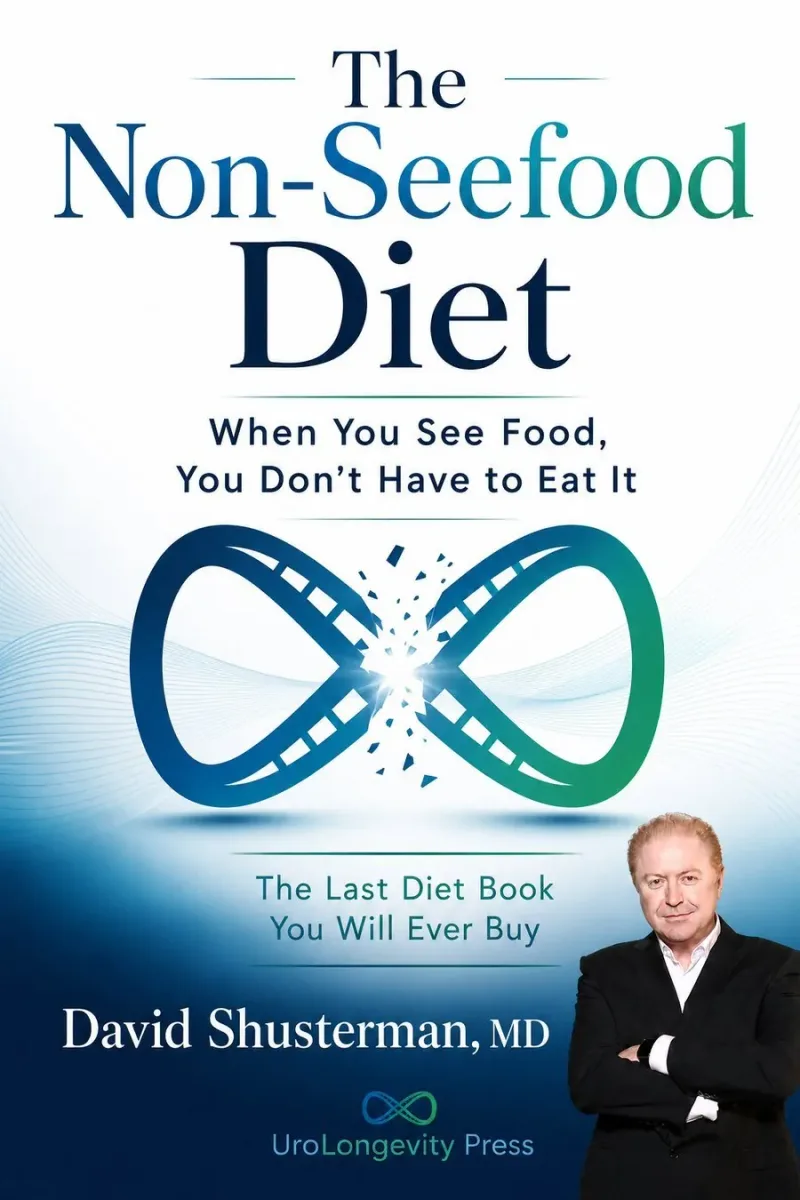
Read more in The Non-Seefood Diet
The book built entirely around breaking the see-it-eat-it reflex — when you see food, you don't have to eat it.
See the book →This article is for general education and is not a substitute for personalized medical advice, diagnosis, or treatment. If you have symptoms or concerns, speak with a qualified healthcare provider.